Metropolitan
Playhouse
The American Legacy
The American Legacy
"Theatrical archaeologist
extraordinaire" - - Back Stage


|
Metropolitan
Playhouse
The American Legacy "Theatrical archaeologist
extraordinaire" - - Back Stage
|
|
|||||||
| Playing | Next | Season | Tickets | Company | Location | Mission | History | Links |
|
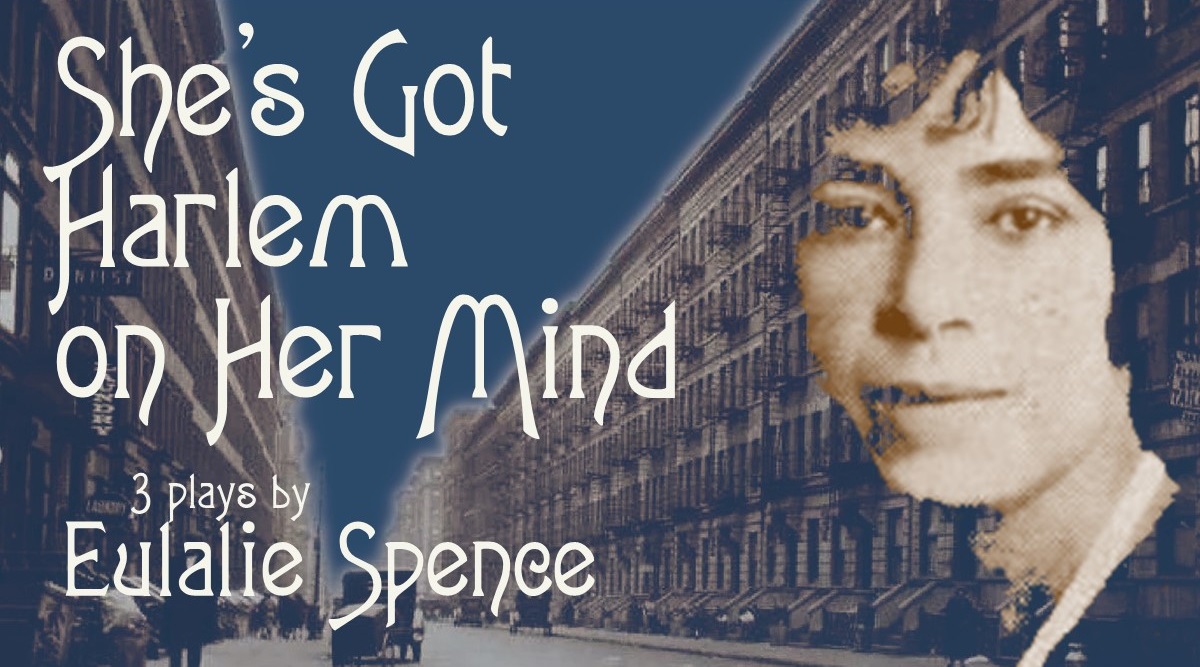 SHE’S GOT HARLEM ON HER MIND AT METROPOLITAN PLAYHOUSE PRIZING WOMEN’S WRITING
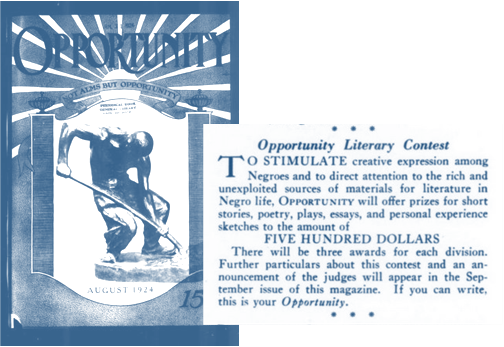 The
movement to cultivate Black American
literature and art in the 1920’s,
flourishing in the Harlem Renaissance,
created new opportunities for artists
who had been ignored up to that time…and
most of the time since: Black women
playwrights. Important to the creation
of their work were new play contests
sponsored by literary magazines, notably
Crisis (founded in 1910 by the
NAACP) and Opportunity
(published by the National Urban League
from 1923-1949). The
movement to cultivate Black American
literature and art in the 1920’s,
flourishing in the Harlem Renaissance,
created new opportunities for artists
who had been ignored up to that time…and
most of the time since: Black women
playwrights. Important to the creation
of their work were new play contests
sponsored by literary magazines, notably
Crisis (founded in 1910 by the
NAACP) and Opportunity
(published by the National Urban League
from 1923-1949).Commercial opportunities in the theater were limited enough for Black writers at large, and that much more for women. Prizes and publication created a market for new work, and short work in particular. The magazines also complemented the growing number of Little Theaters—non-commercial producers around the country housed in schools and churches as well as established performance halls—and helped feed those theaters new plays. HIDING IN PLAIN SIGHT Nearly one-hundred years on, many of these plays remain barely known. In part, obscurity is a function of theater economics that discourage production of short plays. Investment in them cannot be justified to many producers beyond school or community groups. In part, they fall victim to persistent marginalization of Black and female writers. Even a writer as recognized as Zora Neale Hurston, herself a prize-winner in the 20’s, cannot be said to be “over-produced” today. The most successful of the contest writers, with four prize-winning plays in her repertoire, was Eulalie Spence, whose near-effacement is a great loss to American culture. Her distinctive humor embellishes her feel for human foible and triumph, and she captures life as it is lived by people she knows with an authenticity perfectly balanced by her sense of drama. The three plays that Metropolitan presents as She’s Got Harlem on Her Mind are each prize-winners. In “The Starter,” a hard-working and hopeful couple negotiate what may or may not turn out to be their engagement; in “Hot Stuff,” a jaded numbers game banker makes a series of bad bets leaving her owing as much as (and maybe more than) she has to lose; and in “The Hunch,” a starry-eyed bride-to-be gets a dose of unwelcome but life-changing clarity from a devoted admirer. These three tales are simple and recognizable stories of specific people’s lives, populated by characters with complicated motivations and moralities. Neither sanctified portraits of the virtuous, nor histrionic tales of the villainous, they are that special breed of theater that is artful for its artlessness and powerful for being unassuming. THE POWER IN THE TRUTH In spite of that quality, or perhaps because of it, there is something subversive and daring about the plays, particularly considered in their own time. Because Spence writes of everyday people, she writes of mundane and profane concerns, both innocent and illicit. The plays are filled with generosity, understanding, caring, and love, but their world includes sexual affairs, gambling, cheating, and fighting. For a Black woman to write frankly and truthfully of such common human behavior is to run the risk of stimulating all-too-readily inflamed prejudices and stereotypes, whether in 1920 or 2020. And yet, if producing them represents a kind of political act—the expression of an unheard voice speaking the truth of her community—their author never intended them to be political declarations. In a 1973 interview with the Hatch-Billops Collection, Spence spoke of her aspiring to theater "that has universal good and joy and welcome and understanding, [and] opens the door of humanity a little wider." She goes on: "hammering at an old illness and old injury, whether it is of eighty years, one hundred years or one thousand, does no good at all. It's defeating." Her work is no less than a celebration of Black life. Presenting them is a gift: to honor and admire Eulalie Spence and the world she conjures simply for being what they are. Metropolitan is honored in return to be able to do so in our second in-person presentation of our 31st Season, the season of Awakening. -Alex Roe |
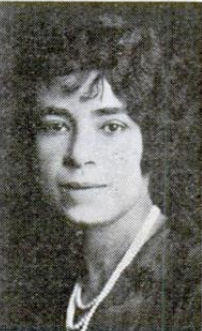 EULALIE SPENCE (1894-1981)A
childhood immigrant to New York from the
Caribbean island of Nevis who earned her
BA from NYU and her MA from Teachers
College, Spence was a New York public
school teacher for most of her adult
life. During her long tenure at
Brooklyn's Eastern District High
School, she included among her
students Public Theater founder Joseph
Papp, who called her "the most
influential force in [his] life."
Through the 20's and 30's, she was also
a well-respected playwright, actor, and
director, closely involved with the
Krigwa Players, The Dunbar Garden
Players, and Columbia University's
Laboratory Players. Of her 14
known plays, 5 earned prizes. Her
greatest mainstream commercial success
was nonetheless a near-miss: her only
full-length play, The Whipping, adapted
from a novel by Roy Flannagan, was
slated for a commercial premiere in 1933
starring Queenie Smith, but was canceled
before opening. Spence optioned
the script to Paramount Pictures for a
film that ultimately became the barely
recognizable Ida Lupino comedy, Ready
for Love. The Whipping was her last
play, though she remained an active
director and drama teacher for her
remaining years.
EULALIE SPENCE (1894-1981)A
childhood immigrant to New York from the
Caribbean island of Nevis who earned her
BA from NYU and her MA from Teachers
College, Spence was a New York public
school teacher for most of her adult
life. During her long tenure at
Brooklyn's Eastern District High
School, she included among her
students Public Theater founder Joseph
Papp, who called her "the most
influential force in [his] life."
Through the 20's and 30's, she was also
a well-respected playwright, actor, and
director, closely involved with the
Krigwa Players, The Dunbar Garden
Players, and Columbia University's
Laboratory Players. Of her 14
known plays, 5 earned prizes. Her
greatest mainstream commercial success
was nonetheless a near-miss: her only
full-length play, The Whipping, adapted
from a novel by Roy Flannagan, was
slated for a commercial premiere in 1933
starring Queenie Smith, but was canceled
before opening. Spence optioned
the script to Paramount Pictures for a
film that ultimately became the barely
recognizable Ida Lupino comedy, Ready
for Love. The Whipping was her last
play, though she remained an active
director and drama teacher for her
remaining years. |
   |
|
 |