
Metropolitan Playhouse
The American Legacy
The American Legacy
"Theatrical
archaeologist extraordinaire" - - Back Stage

Follow us....


|
Metropolitan Playhouse
The American Legacy "Theatrical
archaeologist extraordinaire" - - Back Stage
|
Follow us.... |
|||||||
| Playing | Next | Season | Tickets | Company | Location | Mission | History | Links |
|
| The
House of Mirth |
| The
.000001% “I think you’ll find the only difference between the rich and other people is that the rich have more money.” – Mary Colum to Ernest Hemingway
In Edith Wharton’s age, perhaps
more than ours, the very upper class she wrote about was
unfamiliar to most of her readers. Hundreds of thousands
read The House of
Mirth on its publication, while Mrs. Astor’s
list was only 400. What do we make of a
fascination with the wealthy?
What Mrs. Wharton revealed, of course, was that, however alien her characters’ material comforts might be, their emotional pains and spiritual needs were only too common. And by writing of a rarified breed, she could etch those human stories all the more sharply. The story of The House of Mirth is
that of Lily Bart—radiant and witty, she has learned
to be a precious ornament to country house parties and
society balls. But Lily is at the end of her youth,
and she is quite without means. Charming Lawrence
Selden might offer her security, but between his own
relative poverty and doubting morality, his offers are
hardly guaranteed. So, being possessed of enough pride
to refuse to marry without love, Lily is at the mercy
of her friends…“friends” who resent her beauty, fear
her wit, and sting from her irksome tendency to rise
above their meaner impulses. On a journey through
adulation, dismissal, devotion and betrayal, Lily
passes from luxuriant socialite to penurious
seamstress, with only the great fineness of her spirit
to guide her.
The
House of Mirth was Edith Wharton’s first great
success—a breakthrough novel in 1905. Within a year, a
theatrical adaptation was on the boards, for which she
contributed all the dialogue, and reigning king of the
turn-of-the-century stage, Clyde Fitch, drafted the
scenario. As a satire of high society, the story describes a ruthless battle among the upper-upper-class to hold a tenuous balance on the top rung of the social ladder. Through its author’s cutting wit and subtle innuendo unfolds a very funny if painfully cruel portrait of a frivolous but powerful class of American. Notably, this is not the landed aristocracy of Old Money establishment; rather, this House is populated with striving members of the nouveau riche—Wall Street types and lawyers lately successful in the speculative boom that followed the Gilded Age. Neither possessed of “noblesse” nor particularly “obligée,” they are the new American and they are an insecure force to be reckoned with—then as now. Where Ignorance Is Bliss… As excellent a satire as the story is, its power lies in its deeper revelations—all of which transcend the milieu in which it is set. Lily’s is the story of a woman trapped by the company that embraces her: she is trained to be only one of its members, bound by its heartless codes, and if her own code diverges, the consequences are brutal. Hers is the story of a woman dreaming of an ideal union, and confronted with the failings of human affection. She is a woman seeking independence in a world where only men have material power. And in each of the others who populate her world she finds a spirit striving to connect with another, but either too timid to extend an ungloved hand, or frostbitten for having done so.
These stories are heartbreakingly poignant, for through her naiveté and willful independence, Lily’s journey leads her to an understanding too penetrating for the world she lives in. She can neither acquiesce to the demands of her tribe, nor free herself from its hold. In her final choices, she is a woman who has gained an awful lucidity finding her place in the world: she sees she has no place in it. Distinction Even in times of less extreme disparity between the haves and the have-nots in America than today, wealth has offered an easy way to subdivide our imperfect union into classes. And yet in our democratic hearts, we want to believe we are all equally worthy. And then, in our less charitable—though perhaps more meritocratic—souls, we yearn to distinguish ourselves—by manner, by association, by achievement, by virtue… The House of Mirth appraises these conflicting impulses with a subtle and candid eye. Coldly evaluating the true value of money—it pays for things, and sometimes for people—the play grants no great dignity to the wealthy, but neither does it undervalue their worth. Frankly critical of our yearning to raise and protect our status, the play exposes the cutthroat hostility that can lie beneath the most pleasingly turned phrase. Then warmly embracing the worth of an independent spirit, the play finds a tragedy of a failure to conform. As a study not merely of “high
class people,” but of the lengths we all might go to set
ourselves apart within our own flock, the play is an
ideal capstone to Metropolitan’s Season of Class.
- Alex Roe |
 Edith Wharton (1862
-1937) was a preeminent chronicler of turn of the century
high society in her novels and short stories, and with
1920's The Age of
Innocence, she became the first woman to win the
Pulitzer Prize. Born into the upper reaches of America's
privileged class, she was able to capture its nuance,
cadence, and limitations. Yet she described that world
with both a satiric detachment and an acutely feeling
sense of human struggle within. Among her other best known
works are Ethan Frome,
The Custom of the Country, Old New York, and The Reef. She
traveled extensively with her husband, and after their
divorce in 1913, relocated from the home she had designed
(The Mount, in Lenox MA) to France. She was active in
reporting from the French front lines in World War I, and
worked with a broad array of relief efforts during and
after the war, earning the title of Chevalier of the
Legion of Honor. Edith Wharton died of a stroke in her
country estate outside of Paris in 1937. Edith Wharton (1862
-1937) was a preeminent chronicler of turn of the century
high society in her novels and short stories, and with
1920's The Age of
Innocence, she became the first woman to win the
Pulitzer Prize. Born into the upper reaches of America's
privileged class, she was able to capture its nuance,
cadence, and limitations. Yet she described that world
with both a satiric detachment and an acutely feeling
sense of human struggle within. Among her other best known
works are Ethan Frome,
The Custom of the Country, Old New York, and The Reef. She
traveled extensively with her husband, and after their
divorce in 1913, relocated from the home she had designed
(The Mount, in Lenox MA) to France. She was active in
reporting from the French front lines in World War I, and
worked with a broad array of relief efforts during and
after the war, earning the title of Chevalier of the
Legion of Honor. Edith Wharton died of a stroke in her
country estate outside of Paris in 1937. Between 1890 and 1909, Clyde Fitch wrote at least 62 plays—36 original scripts, 21 adaptations, an 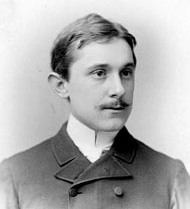 d five dramatizations of novels. For most of his
career, he was the reigning king of New York theater: On
one occasion, he had four plays running on Broadway; on
another occasion, he had five. In the days before income
tax, his annual earnings were equivalent to $15 million
today. As sensational as his plays were, with their
opulent, realistic settings and reliance on well-worn
plots and melodrama, were hot controversies involving the
man, including plagiarism (false), obscenity (acquitted)
and homosexuality (true). Two of his finest plays (both
revived at Metropolitan) raised eyebrows—what with Fitch’s
female lead in The
Truth committing suicide, and audiences at The City shocked and
even fainting over Fitch’s depiction of drug abuse, incest
and an actor uttering the word “goddamn” for the first
time on a Broadway stage. Off-stage, Fitch raised eyebrows
with his sartorial flamboyance, effeminacy, luxurious
lifestyle, and, early in his career, a brief romance with
Oscar Wilde to whom he was often compared. Fitch died in
France in 1909 at age 44. d five dramatizations of novels. For most of his
career, he was the reigning king of New York theater: On
one occasion, he had four plays running on Broadway; on
another occasion, he had five. In the days before income
tax, his annual earnings were equivalent to $15 million
today. As sensational as his plays were, with their
opulent, realistic settings and reliance on well-worn
plots and melodrama, were hot controversies involving the
man, including plagiarism (false), obscenity (acquitted)
and homosexuality (true). Two of his finest plays (both
revived at Metropolitan) raised eyebrows—what with Fitch’s
female lead in The
Truth committing suicide, and audiences at The City shocked and
even fainting over Fitch’s depiction of drug abuse, incest
and an actor uttering the word “goddamn” for the first
time on a Broadway stage. Off-stage, Fitch raised eyebrows
with his sartorial flamboyance, effeminacy, luxurious
lifestyle, and, early in his career, a brief romance with
Oscar Wilde to whom he was often compared. Fitch died in
France in 1909 at age 44. |
 |
 |
|