
Metropolitan Playhouse
The American Legacy
The American Legacy
"Theatrical
archaeologist extraordinaire" - - Back Stage


|
Metropolitan Playhouse
The American Legacy "Theatrical
archaeologist extraordinaire" - - Back Stage
|
|
|||||||
| Playing | Next | Season | Tickets | Company | Location | Mission | History | Links |
|
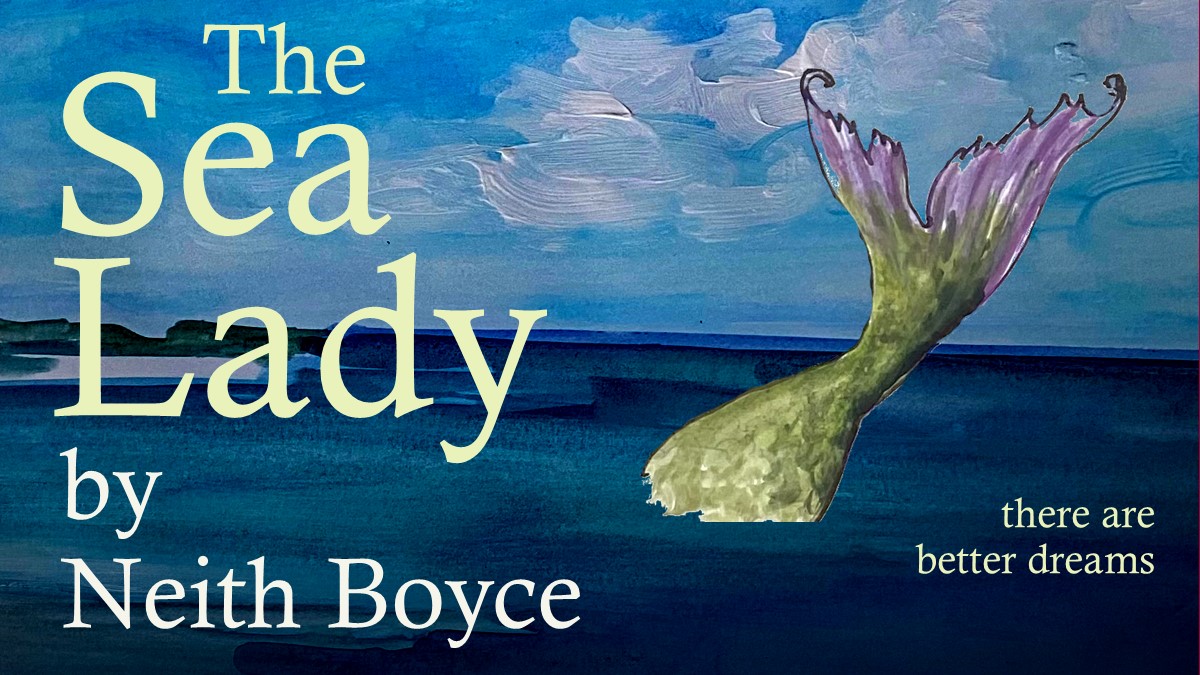 Based
on the novel by H.G. Wells,
a
mermaid comes to Victorian England
in search of a soul,
and
the soul-searching begins.
"There are better dreams..." BETTER DREAMS What if the life we lead—the rules we follow, the injuries of the past, our hopes for the future—were simply one dream of many? Given the chance to choose another, would we? Would we dare? In The Sea Lady, a mermaid swims ashore in Victorian England, intent on acquiring a Soul. Her dream of finding new life on land enchants Mrs. Bunting, socially striving matriarch of the family that adopts her. But she has another message for restless young politician Harry Chatteris: that there are “better dreams” than the comme il faut life he knows. At once mysterious, alluring, menacing, and amusing, her passage through the lives of the Victorians is a disruptive promise and a beguiling challenge to each. And, it becomes very clear that “getting a soul” can mean very different things. OTHER WORLDS Fiction loves a parallel existence—of ghosts, gods, extra-terrestrials, angels, vampires, or eternals under the sea—and its two usual tacks are both taken by The Sea Lady. In the Romantic conception, the denizens of these other realities long to join ours. This is a favorite trope of the mermaid tale dating to Friedrich de la Motte Fouqué’s Undine (1834), in which an elemental creature of the water could gain an immortal soul by marrying a human. Hans Christian Andersen’s Little Mermaid (1837), in the original and the somewhat sweetened Disney versions, developed the concept in its own way, while Splash (1984) took the romantic couple in the opposite direction, and Christian Petzold’s film Undine took yet another, less rosy turn in 2020. But in the other conceit, life as we know it is paltry and compromised, even somehow inauthentic—in some ways a fabrication or dream—cut off by our willful ignorance from the better dreams of which we are capable. This is the realm of C. S. Lewis’s fiction, or The Matrix films. In this conception, we are in Plato’s cave, staring at shadows on the wall, and visitors from reality appear to ask us just to turn around. Or perhaps we are hearing the call of those other ladies of the sea, the Sirens who lured Greek heroes to their dooms. The Sea Lady embraces both traditions, and it is all the more compelling for doing so. The mermaid’s fascination with the features of life on land—from cigarettes to jealousies to politics—highlights both earned pleasures and chosen pains of civil society. The story is sincere in both its amusement with mortal burdens as well as its defense of assuming them. At the same time, the play’s inquiry into the promise of an other, better dream, freed from the “oatmeal of daily life,” beautifully captures the quandary posed to us corporeal creatures who are gifted with imagination. The play challenges the foundation of faith and gets right to the heart of desire. FOUND AT SEA The Sea Lady began as a serialized novel by genre-defining fantasist H.G. Wells in 1901. As with all the best 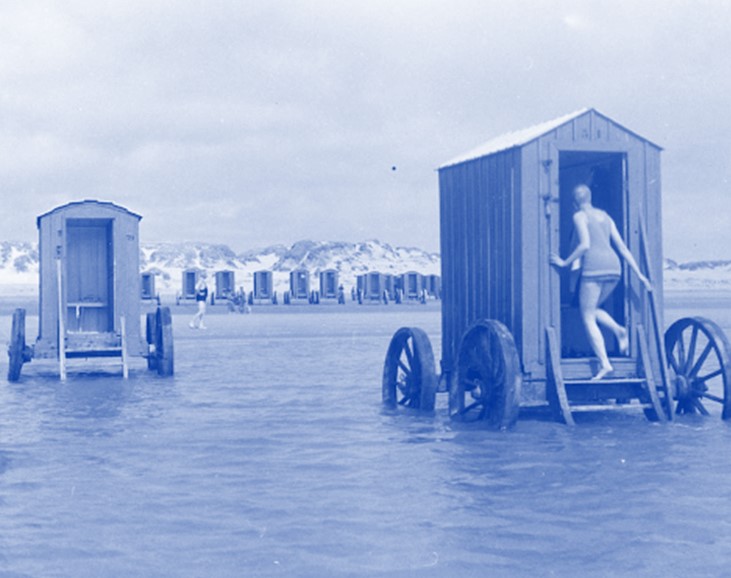 fantasy
fiction, Wells’ story is a lens by which
to question the norms and hypocrisies of
his time, articulating a Socialist
critique of British class structure (as
well as his commitment to Free Love).
Neith Boyce, playwright, poet, novelist,
and co-founder of the genre re-defining
Provincetown Playhouse, was
commissioned to adapt the story to the
stage in 1930. A philosophical anarchist
and a New Woman questioning American
sexual mores from within her own open
marriage, she was a kindred spirit to the
British icon. fantasy
fiction, Wells’ story is a lens by which
to question the norms and hypocrisies of
his time, articulating a Socialist
critique of British class structure (as
well as his commitment to Free Love).
Neith Boyce, playwright, poet, novelist,
and co-founder of the genre re-defining
Provincetown Playhouse, was
commissioned to adapt the story to the
stage in 1930. A philosophical anarchist
and a New Woman questioning American
sexual mores from within her own open
marriage, she was a kindred spirit to the
British icon.But after 5 years work, with a Broadway premiere on the horizon and her Provincetown colleague Bobby Jones, by now a popular Broadway designer, conceiving the sets, Wells’ agents pulled the rights. (Perhaps Wells had a film version in mind? There was talk in Hollywood of Tallulah Bankhead as the titular Elemental.) The play languished among Boyce’s papers at Yale University, but her biographer Carol DeBoer-Langworthy sent Metropolitan a copy some years ago. Following our enhanced virtual reading online in December of last year, we are delighted finally to oblige. The stage adaptation elicits the dramatic tension in each moment of the story. Its eight scenes are rooted in the characters’ conflicting desires, making existential choices poignant and personal. So too do they draw out the humor of human foibles and aspirations. Mockery of class stereotypes is rooted in the comedy of people trying to get along with people, let alone mermaids. We cannot but laugh as we nod along with Harry and his fiancée's troubled courtship, the Sea Lady’s bemusement by the mortals’ fixations on riches, Mrs. Bunting’s befuddlement over how to introduce a mythical creature to Society, and a frustrated reporter’s bedevilment by a guarded aristocracy. 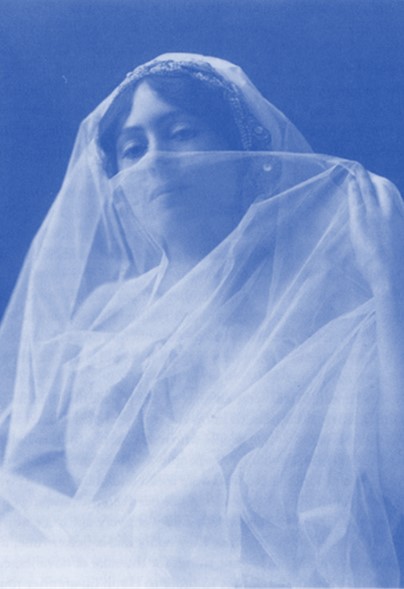 Boyce’s gift at
bringing the narrative to the stage
certainly also enriches each character.
Across the board, her exploration of their
different choices is more complicated than
that of the novel. And her singular
perspective on the society she inhabited
adds yet a new dimension: all of the
female characters are more fully
developed. Their roles in the drama, their
opinions and desires, the consequences
they incur all gain substance. The Sea
Lady, herself, has more of a voice. Boyce’s gift at
bringing the narrative to the stage
certainly also enriches each character.
Across the board, her exploration of their
different choices is more complicated than
that of the novel. And her singular
perspective on the society she inhabited
adds yet a new dimension: all of the
female characters are more fully
developed. Their roles in the drama, their
opinions and desires, the consequences
they incur all gain substance. The Sea
Lady, herself, has more of a voice.MULTIVERSED Questioning our fixity in what we think we know is not new: it goes back as far the butterfly dreaming he was a philosopher...unless it was the other way around. But today, even the multi-verse has become a humdrum setting. If our fictions reflect our times, then in a world that seems increasingly strange, perilous, and unjust, when calling into question what one has always taken for granted has become a norm, the thought of waking into some other existence not only tempts the imagination, it promises an outright relief. But so does affirming our potential in this world, embracing the joys and comforts of our attachments, or fighting for the causes that make life better for our neighbors toiling in the same reality. Perhaps the better dream we might wake to is a new vision of the world we know. The Sea Lady does not tell us what to conclude; it poses the possible question. We are delighted this play will welcome audiences back to Metropolitan, whose mission is always to manifest other worlds and different dreams. Welcome back from our fitful hibernation and our alternate life as a Virtual Playhouse, into our 31st Season: the Season of Awakening. |
 NEITH BOYCE (1872-1951) was a
Progressive-Era writer who became the sole woman
reporter for The Commercial Advertiser when she
moved to Greenwich Village in the 1890's. There, in
1899, she wed radical journalist Hutchins Hapgood, and
they lived in Paris, Florence, New York, and
Provincetown, MA, as part of a circle of ground-breaking
artists that included Gertrude Stein, Mabel Dodge, John
Reed, Margaret Sanger, Susan Glaspell, John Dos Passos,
and many others. With Glaspell and George Cram Cook,
they founded The Provincetown Players, the theater
collaborative on Cape Cod that launched Eugene O'Neill's
career. A novelist, poet, essayist, and playwright,
Boyce published four critically acclaimed books between
1900-1910, dozens of short stories in major magazines
through 1920, and the plays Constancy (1915,
the first play produced by the Provincetown Players, in
the couple's rented cottage on Cape Cod), The Two
Sons (1916), Winter’s Night (1928) and Enemies
(1921, with Hapgood). (All but The Two Sons
were presented as online readings by Metropolitan in
2020/21.) Her final publications, in 1923, were the
memoir Harry: A Portrait and the novel Proud
Lady. Her later, unpublished works include an
autobiography, diaries, several works of history, a
novel, short stories, and notably: The Sea Lady. NEITH BOYCE (1872-1951) was a
Progressive-Era writer who became the sole woman
reporter for The Commercial Advertiser when she
moved to Greenwich Village in the 1890's. There, in
1899, she wed radical journalist Hutchins Hapgood, and
they lived in Paris, Florence, New York, and
Provincetown, MA, as part of a circle of ground-breaking
artists that included Gertrude Stein, Mabel Dodge, John
Reed, Margaret Sanger, Susan Glaspell, John Dos Passos,
and many others. With Glaspell and George Cram Cook,
they founded The Provincetown Players, the theater
collaborative on Cape Cod that launched Eugene O'Neill's
career. A novelist, poet, essayist, and playwright,
Boyce published four critically acclaimed books between
1900-1910, dozens of short stories in major magazines
through 1920, and the plays Constancy (1915,
the first play produced by the Provincetown Players, in
the couple's rented cottage on Cape Cod), The Two
Sons (1916), Winter’s Night (1928) and Enemies
(1921, with Hapgood). (All but The Two Sons
were presented as online readings by Metropolitan in
2020/21.) Her final publications, in 1923, were the
memoir Harry: A Portrait and the novel Proud
Lady. Her later, unpublished works include an
autobiography, diaries, several works of history, a
novel, short stories, and notably: The Sea Lady.
|
   |
|
 |