Metropolitan
Playhouse
The American Legacy
The American Legacy
"Theatrical archaeologist
extraordinaire" - - Back Stage


|
Metropolitan
Playhouse
The American Legacy "Theatrical archaeologist
extraordinaire" - - Back Stage
|
|
|||||||
| Playing | Next | Season | Tickets | Company | Location | Mission | History | Links |
|
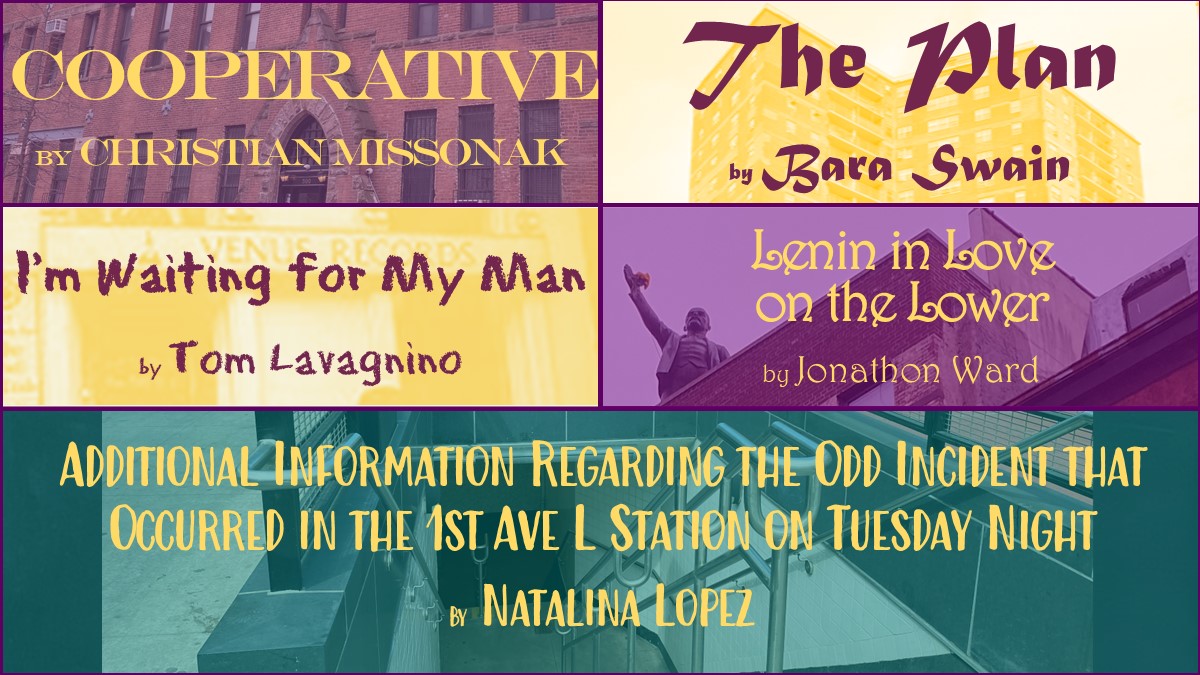 EAST SIDE STORIES, ACTUALLY EAST SIDE STORIES, ACTUALLYFive New Tales of Truth in the Lower East Side |
|
|
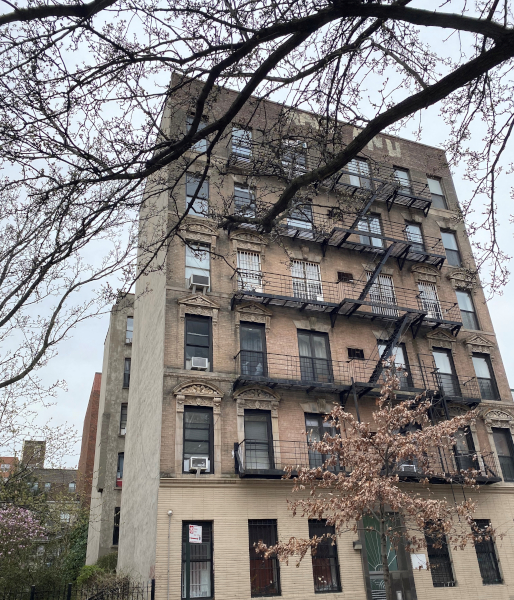 Cooperative Cooperativeby Christian Missonak Lucas is a progressive crusader for tenant's rights, living in a squat-turned-coop in Alphabet City. But this social justice warrior doesn't always see eye-to-eye with the tenants who actually built his home. Today, the East Village and Alphabet City show the effects of significant gentrification that started in the late 90s. Before that time, it had a much different reputation; in particular, neglect from property owners resulted in poor living spaces and lower rent. Despite the state of disrepair, the neighborhood pulsed with culture and the arts. Gentrification of Greenwich Village in the 50s pushed a crowd of artists east; rent was low and the neighborhood was not a coveted area. But the Bohemian, neighborly spirit was alive and well, and things slowly became more inviting to a broader crowd. Arts thrived; infrastructure evolved; the community in general saw significant cultural and demographic changes. The 70s and 80s again saw a dip in the maintenance and quality of residential buildings, particularly in the wake of the fiscal crisis in the early 70s, but the arts and culture continued to attract a wealthier crowd. Such changes forced many residents, including immigrants who had been instrumental in building up the community, out of the area. Community members organized to combat the issue. UHAB (Urban Homesteading Assistance Board) was founded during this crisis. For the past fifty years, the organization has fought to defend low- to moderate-income residents' access to affordable housing. Residents took it upon themselves, too, to construct and protect their homes; one community at 519 East 11th Street even banded together to build and install a windmill to affordably power their homes. Coops became more commonplace. The Cooperative Village in the Lower East Side is made up of four coops developed over the last century by trade unions. These coops, like the one in this play, have been known for their particularly communal feeling and their historical affordability. HDFC (Housing Development Fund Corporation) coops, for example, have income caps in order to help slow this gentrification trend and keep the area more accessible. While luxury buildings keep cropping up, and the market continues to rise, many community members and advocates fight to preserve these coops for this reason. Perhaps it is this dedication to the neighborhood which has kept the community feeling alive through the decades. Additional Information Regarding the Odd Events that Occurred in the 1st Ave L Station on Tuesday Night 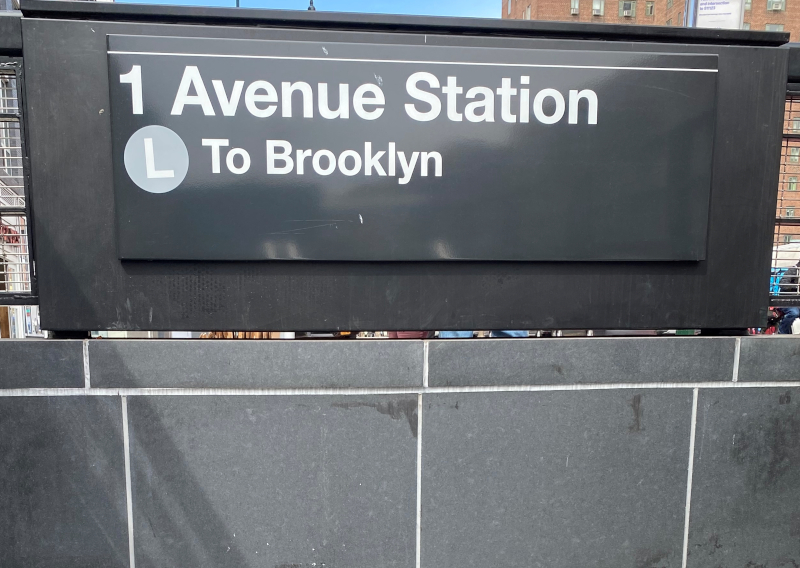 by Natalina Lopez Callie all but lives in the L station where her father owns a flower shop. A second generation American teen with her eye on the horizon wants to see above the sidewalk, but her heart knows flowers draw their life from their roots. Subway station shops are an NYC staple, and their location is not arbitrary. Janno Lieber, Chair and CEO of the MTA, says that a goal of these shops is to attract more customers, which in turn helps deter and spot crime. In 1989, when this play takes place, New York became a sanctuary city, bolstering the immigrant population; many of these immigrants set up these shops and made names for themselves in a community reluctant to accept them. Also in 1989, Nirvana's Kurt Cobain, who may make an appearance in this play, performed at The Pyramid Club at 101 Avenue A; it was the only location in NYC at which Nirvana ever played. Besides hosting up-and-coming musical artists like the Red Hot Chili Peppers & Nirvana, Pyramid brought the city Wigstock, the seminal drag festival, and remained the heart of drag in the 80s and helped to bring drag culture into the mainstream. Ironically, movements like these sped the gentrification of the neighborhood, which affected the lives and livelihoods of the working class who made their livings in shops like the one in this play. I'm Waiting for My Man 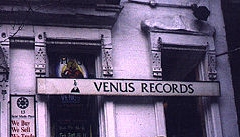 by Tom Lavagnino Tad and Elliot wait at Venus Records on St. Marks Place for Lou Reed's signature on their albums. Soon enough, they have to face what that prize is really worth. Tad and Elliott are in line at Venus Records, "the sort of store the cool kids in 80's movies hung out in” (NYC Goth). Elliott's beloved The Velvet Underground and Nico, the debut album of American rock band the Velvet Underground and German singer Nico, was released in March 1967 through Verve Records. The band was featured on Andy Warhol's Exploding Plastic Inevitable tour, and the album cover features the iconic Warhol banana. The album itself features experimental performance sensibilities and controversial lyrical topics, including drug abuse, prostitution, sadomasochism, and sexual experimentation. Lou Reed was known for the experimental nature of his music, coming from his time with the avant-garde rock band The Velvet Underground. With him in the Underground were John Cale, Sterling Morrison, and Angus MacLise (replaced by Moe Tucker in 1965). The band didn't attract a great audience in its time (though it has since more than earned a prominent place in rock history), and Reed eventually pursued a solo career that pushed him into the spotlight. His individual work covered a variety of genres and styles as well. This review gives one take on his performance of "Magic and Loss," a song cycle reflecting on terminal disease that was performed during the LA riots and gives a taste of how eclectic Reed's work could be, and perhaps an explanation of why his myriad fans, like Tad and Elliott, might not always have too much in common. 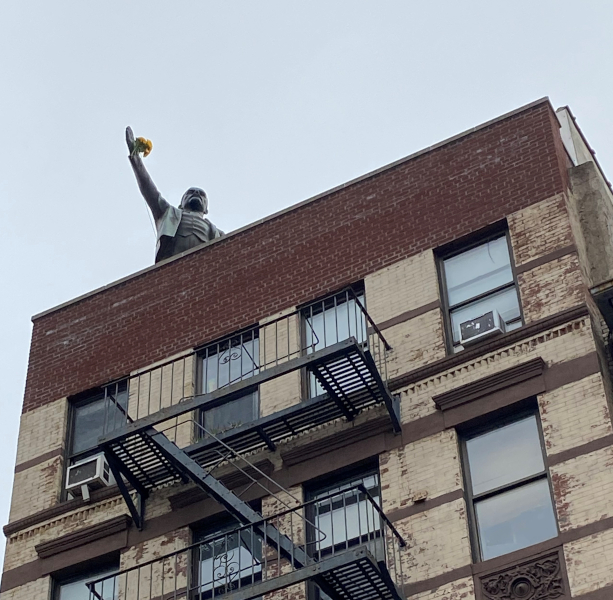 Lenin in Love on the Lower Lenin in Love on the Lowerby Jonathon Ward An author returns to New York to renovate her inherited tenement, a Colorado contractor follows with hopes to rebuild their relationship, and the rebellious spirits of the neighborhood make for a new kind of social contract. This play, in present day LES and in a fictionalized version of the neighborhood in the 1930s and 50s, explores what connects geographic and familial past to the present. In the early 20th century, the Socialist Party of America split, paving the way for a communist party in the United States. The CPUSA developed alongside other communist parties across the globe as well as the American labor movement; its involvement with the Soviet Union set it apart from other political parties in the 60s. For a while, it received funding from the Soviet Union and in turn assisted with Soviet intelligence in the United States. This relationship ended after the CPUSA opposed glasnost and perestroika and the Communist Party of the Soviet Union cut off funding to the US counterpart in 1989. New York became a national center for the party, and the Lower East Side was among the neighborhoods central to the party’s support and organization. The national headquarters, in fact, is still located on 23rd street, but its ties to the Soviet Union led many eventually to reject the party. At the turn of the 20th century, the Lower East Side was also an American home to Jewish culture. The earliest Eastern European Jews to settle there had quickly established synagogues, mutual-aid societies, libraries, and stores. Every major institution in the neighborhood, from the bank to the grocery store to the social club to the local bookmaker, was Jewish-owned or Jewish-run, and everyone a Jewish immigrant might speak to in the course of daily business would likely be Jewish. Impoverished, dangerous, and still the target of prejudices in the US, the neighborhood was not an easy place to live, it was something of a respite from the more violent anti-Semitism of Russia and Eastern Europe, and the familiarity of language, history, and faith might be a distinct comfort to a Jewish immigrant. The Plan 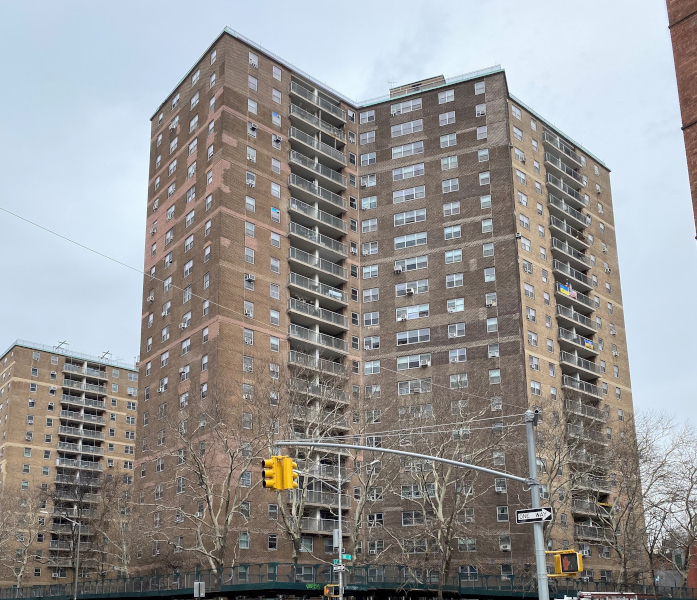 by Bara Swain The time has come for Marge to leave her apartment for assisted living, but her daughter's plan doesn't have to mean losing EVERYthing. Village View, originally a Mitchell-Lama Coop, opened in 1964 and consists of seven buildings between First Avenue and Avenue A from East 2nd to East 6th Street. The development was built by the New York City Housing Authority (NYCHA) and sponsored by six local educational institutions. The coop became a neighborhood institution and a slightly more affordable alternative to the ever-pricier real estate in the neighborhood. In 2016, some shareholders debated whether to privatize the coop, effectively ending the affordable housing program at Village View. Within four months, a motion was passed to end this debate until a majority of residents voiced interest in the topic. Four years later, murmurs of privatization began to arise again. Residents and commenters were put off by the thought of privatization and the tone with which it was presented. Many were appalled by the idea of eliminating more of the rapidly decreasing affordable housing options in the city. Heated debates ensued, but as yet, no practical changes have been made. |
   |
|
 |