MRS. PAYNE-DEXTER: I
want to make the débutantes and their smart
young men side-step for me.
Their youth and
prettiness is no longer mine, but I hold over
them the whip hand. I am a dowager, a
member of the society
that once ruled New York, and does still to a
certain extent
and they shall bow to me as long as I inhale one
breath of life!
MRS. DORCHESTER: I do believe
you are jealous of the present generation.
MRS. PAYNE-DEXTER: I am, I am
fiercely jealous.

"Chicago's No. 1 Playwright":
Alice Gerstenberg (1885 - 1972)
Alice Erya Gerstenberg was born in
Chicago, Illinois, the only child of Julia and Erich
Gerstenberg. Gerstenberg’s grandfather was a founder
and member of the Chicago Board of Trade in
1848, a position Gerstenberg’s father inherited
later on, which meant that the Gerstenbergs enjoyed
a higher standard of living than most middle-class
families in Chicago at the time. Growing
up, Gerstenberg had ample travel
experiences and social indulgences
including commercial
theater. From
her father she inherited endurance, and
from her mother a love of
theater. She was the
valedictorian at the exclusive Kirkland
School in Chicago and attended all-women's
Bryn Mawr College in Pennsylvania (1907).

After living in New York for a brief
period, meeting with leading figures in
New York theatre circles, including David
Belasco and with an early avant-garde
theatre group, the Washington Square
Players, Gerstenberg returned to Chicago,
where she continued to write plays; became
involved with the Little Theatre movement
to forward her work; cared for her
parents; and exercised a strong feminist
dedication to bringing non-commercial
theater to new playwrights, children, and
Chicagoans.
Her previous
involvement with the theater during her childhood,
the plays she wrote at college, as well as the time
spent in New York led her to continue writing plays
for the rest of her life, working occasionally as an
actress, and maintaining an activist role in the
theater. Although the majority of her plays have
largely been forgotten, her central work Overtones
has continued to be produced since its publication
in 1913. It was first produced in November
1915 by the Washington Square Players at the Bandbox
Theater in New York. The play
crystallizes her use of experimental form with a
familiar dramatic conflict. The play enjoyed many
productions due to its innovative use of the split
subject, a technique Eugene O'Neill would later use
in his play Strange Interlude. Overtones
was presented recently by Metropolitan Playhouse as
part of its virtual playhouse series as was:
Gerstenberg's Fourteen, a light satire on
the pettiness of high society dinner parties; and The
Pot-Boiler, a comedy about the pretensions of
conventional theater which appeared in Gerstenberg's
second collection, Ten One-Act Plays (1921).
They have appeared in numerous anthologies of
one-act plays and have been produced by little
theaters all over the U.S., England, and Australia.
Gerstenberg continued to write many one-act plays
early on in her career, many of which were performed
by regional or little theaters in and around
Chicago. Her best received full-length was an
adaptation of Alice in Wonderland published in 1915,
which met with great success, and remained the
standard until the renowned Eva Le Gallienne wrote
her version in 1932.  Gerstenberg’s influence on the
theater is not limited to her early experimental
playwrighting forms: she played a crucial role in
the foundation and success of several theater
companies as well as the Little Theater Movement
in Chicago. In 1921, she foundedthe Junior
League Children’s Theater in Chicago; in 1922 she
founded the Playwrights Theater; and finally she
supported an amateur theater company that was
eventually named for her at its foundation in
1955. Gerstenberg’s influence on the
theater is not limited to her early experimental
playwrighting forms: she played a crucial role in
the foundation and success of several theater
companies as well as the Little Theater Movement
in Chicago. In 1921, she foundedthe Junior
League Children’s Theater in Chicago; in 1922 she
founded the Playwrights Theater; and finally she
supported an amateur theater company that was
eventually named for her at its foundation in
1955.
Her work with these theater companies demonstrates
her commitment to making non-commercialized
theater available to new playwrights, giving them
the opportunity to see their plays produced;
regional playwrights, demonstrating an
appreciation for Chicago and the Midwest; and
finally to children, giving them an early
experience with the theater, the opportunities to
act, write, and become involved. Furthermore, she
hoped that her work would bring Chicagoans to
support non-commercial theater.
Gerstenberg remained involved in the theater
throughout her life, whether as a writer, actor,
or activist. She had many opportunities to move to
New York, but instead chose to remain in Chicago.
Many of her female Midwestern colleagues, such as
Zoe Akins and Susan Glaspell, began writing in the
Midwest but moved to New York where their work was
frequently produced, giving them a firmer
canonical standing. Many criticize Gerstenberg for
not moving to New York when she had the
opportunity, believing that she is a playwright
who had a great start in Chicago but failed to
develop her style. Others cite that
Gerstenberg’s decision to remain in Chicago
demonstrates her commitment to the Little Theater
movement, women’s issues in the Midwest and a
developed sense for the regional community that
she wrote for and about.
In 1938
Gerstenberg
won the
Chicago
Foundation of
Literature
Award for her
work in
American
drama.
Ever Young
and Anna Morgan (1851 - 1936)
Ever Young was written in
Chicago an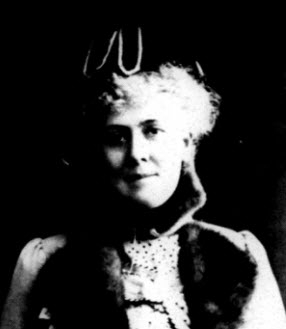 d first produced at
Anna Morgan's Studio Theatre
1920. Anna Morgan (right)
was to have a significant affect
on Gerstenberg's work and
career. d first produced at
Anna Morgan's Studio Theatre
1920. Anna Morgan (right)
was to have a significant affect
on Gerstenberg's work and
career.
When Alice Gerstenberg first
returned to her home in Chicago
from Bryn Mawr in 1908, she came
under the influence of drama
teacher Anna Morgan who
encouraged her to write one-act
plays and to publish A
Little World: A Series of
College Plays for Girls (1908)four
two-act plays written at Bryn
Mawr which examine the lives and
choices of young college women
and their fight for status,
recognition and identity.
In these plays she deals with
contemporary issues of androgeny
and class. Two of these plays, The
Class President (in which
Gerstenberg appeared) and Captain
Joe were presented at the
Anna Morgan Studios, March 12,
1908(See clipping from the
Chicago Tribune, March 13, 1908
to the right). In her
autobiography, My Chicago
(1918) Morgan acknowledges:
 Alice
Gerstenberg, another member of
my professional classes, a
little later began her career
as an author while in the
studios by writing a one-act
play, "Captain Joe," the title
part being especially designed
for Miss Josephine Lydston, a
fellow student. (See
clipping to the right.) Alice
Gerstenberg, another member of
my professional classes, a
little later began her career
as an author while in the
studios by writing a one-act
play, "Captain Joe," the title
part being especially designed
for Miss Josephine Lydston, a
fellow student. (See
clipping to the right.)
Gerstenberg's
work was brought to the attention
of David Belasco (See the clipping
to the left, "Chicago Girl Writes
Play for Belasco" from The Times
Munster, Indiana, Wednesday, May
11, 1910). And she made her
way to New York, to meet with
Belasco and establish a New York
"beachhead" with the experimental
theatre scene in New York, notably
the Washington Square Players, who
were later to produce Overtones.
Returning to Chicago in 1912, Anna
Morgan continued to present
Gerstenberg's work  and to
involve her in the Chicago theatre
scene, the creative community
Gerstenberg would call home for
the rest of her life. and to
involve her in the Chicago theatre
scene, the creative community
Gerstenberg would call home for
the rest of her life.
Anna Morgan was a significant
though unheralded force in the
development of the midwest little
theatre movement. She was a
Chicago teacher who raised the
standards of study for theater and
speech during the late 19th and
early 20th centuries. During a
time when dramatic readings were
usually affected and artificial,
Morgan strove for a naturalistic
style. She also tended toward more
sophisticated material than was
common but continued to perform
standard popular pieces as well.
From 1880 to 1883 she traveled
extensively, and visited New York,
Boston, and major cities in the
Midwest. She joined the new
Chicago Opera House Conservatory
(later the Chicago Conservatory)
as a dramatics teacher, and it was
there that she nurtured and
developed her skills in this field
- and later opened her own school,
the Anna Morgan Studios
(1899–1925), in Chicago's Fine
Arts Building.
The school's mission was not only
to train actors (James Carew and
Sarah Truax attended, who became
leading players of the period),
but also to give students a solid
background in the dramatic arts.
Stage, literary and political
history, playwriting, and
practical courses in acting and
stagecraft were offered. Students
were expected to study deportment
and etiquette and learned about
house decorations and wearing
jewels as well. She also embraced
the Delsarte Method, a system of
conveying emotion through gesture
and body position. Morgan was
responsible for bringing many
advanced plays and innovative
staging ideas to Chicago. She did
not attempt to stage professional
productions, instead holding most
of her programs in intimate
settings such as the
conservatory's stage or her own
studio. She presented everything
from Greek tragedies and
Shakespeare to the works of Henrik
Ibsen, George Bernard Shaw, and
Maurice Maeterlinck, experimental
dramatizations of novels and
poems, and new plays by
then-unknown dramatists, including
Alice Gerstenberg and Marjorie
Benton Cooke . Under Morgan's
direction, Ibsen's The Master
Builder (1895), Carlo
Goldoni's The Fan (translated
by Henry B. Fuller, 1898) and
Shaw's Candida (1898) had
their American premieres. She also
produced the premiere of Shaw's Caesar
and Cleopatra in 1902 with
an all-female cast. This
engendered a rather humorous
exchange when Shaw learned that
his Caesar would be brought to
life for the first time in the
United States not by a
professional, but by an amateur,
and young woman at that (reversing
the custom of Shakespeare's day):
Dear Miss Mor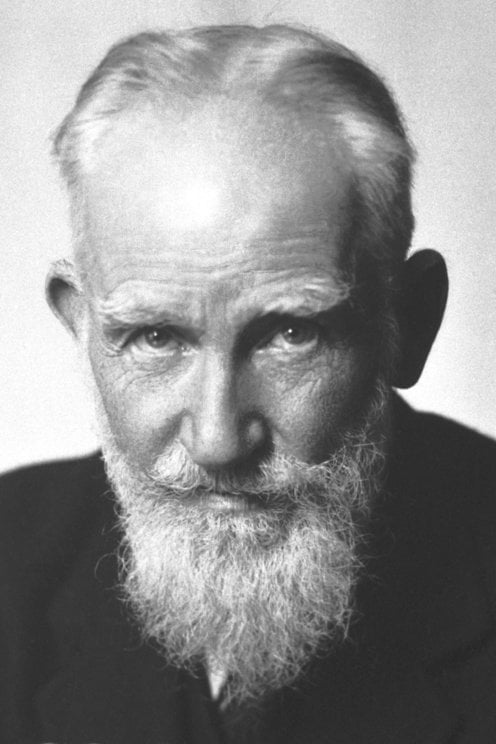 gan: gan:
Great Heaven! Is my Julius Caesar going to be
created at last by a Chicago young lady!
Oh, Anna, Anna, how can I show my face in
Chicago after this?
Yours Stupended,
G. Bernard Shaw.
Anna Morgan wrote three
books: An Hour with Delsarte
(1889), Selected Readings (1909),
and The Art of Speech and
Deportment (1909), and
during the early 1900s enjoyed and
thrived in the company of many
Chicago artists. Her studio became
a salon which Richard Mansfield,
Joseph Jefferson, Ellen Terry ,
Henry Irving, and Maxine Elliott
visited. During trips
abroad, Morgan met both
Maeterlinck and Shaw. She declined
numerous offers to teach in major
cities around the world, choosing
instead to remain in Chicago.
Anna Morgan published her
autobiography, My Chicago,
in 1918, and died in that city in
1936.
 Alice
Gerstenberg (alongside premiere
actress Ellen Terry!) endorsed
Anna Morgan, in her school's
advertisement in the Drama,
1923:
I
began my career in Anna Morgan's
studio and from that time have
always admired her enthusiasm in
ever developing new and modern
methods in dramatic
productions. She has a
sure, swift way of encouraging
individual talent and has always
been the leading instructor of
dramatic art. She has been
the first to introduce new poets
and dramatists.
Alice
Gerstenberg (alongside premiere
actress Ellen Terry!) endorsed
Anna Morgan, in her school's
advertisement in the Drama,
1923:
I
began my career in Anna Morgan's
studio and from that time have
always admired her enthusiasm in
ever developing new and modern
methods in dramatic
productions. She has a
sure, swift way of encouraging
individual talent and has always
been the leading instructor of
dramatic art. She has been
the first to introduce new poets
and dramatists.
Promoting
Forever Young
 Let it not
escape notice that Alice
Gerstenberg was a savvy
show business entrepreneur
as well as a prolific
writer. Her promotion of Ever
Young is a good
example of promoting a
play into the Little
Theatre circles of the
1920s. Let it not
escape notice that Alice
Gerstenberg was a savvy
show business entrepreneur
as well as a prolific
writer. Her promotion of Ever
Young is a good
example of promoting a
play into the Little
Theatre circles of the
1920s.
With the success of her
'college plays for women'
and with Overtones,
she followed up,
deliberately conceiving
plays that called for
casts of only women.
In December, 1920 (and
soon again in February,
1921) Miss Anna Morgan
Studio again presented
Gerstenberg's work, this
time Ever Young.
Gerstenberg
made sure it found its way
quickly and often into
print, to encourage
productions:
- The periodical, the Drama,
December, 1920 - the same month as the
first public reading - ran this
advertisement, offering the manuscript for
production (to the right):
- The Drama,
February, 1922 - a full version of the
play was included in the journal.
- A
Treasury of Plays
for Women,
1922, Little Brown
& Co. edited by
Frank Shay, the owner
of the Washington
Square Book Store, a
board member of the
Washington Square
Players, and the
principal publisher of
plays from the
experimental Greenwich
Village theatre groups
like the Washington
Square Players and the
Provincetown
Players. Along
with Ever Young,
Shay included A
Patroness (1917)
a one-woman twenty
page monologue, that
portrays a day in the
life of a sociry woman
from wake-up to bed
down.
Among the other plays
were works by Eugene
O'Neill, Maeterlink,
Millay and The
Stronger One and
Motherly Love
(which modern
translations have
named The Stronger
and The Mother)
by August Strindberg.
- Book
of One-Act Plays,
1922, Bobbs-Merrill,
compiled Barbara
Louise Schaeffer who
writes in her intro,
about the variety of
form in one-acts:
On
the other hand, some
one-act plays are
simply impressions
but powerful
impressions.
In fact there is
little to forget,
because there is so
little action.
As in ... Ever Young
the illumination is
great just because
there is no thesis,
there is simply a
transcendent picture
of life. In even so
short a compass the
reader's experience
is permanently
enriched; he learns
for the first time
the life of a new
world.
- Four
Plays for
Women 1924,
Brentano by
Alice
Gerstenberg,
in which Ever
Young is
published
alongside Mah-jongg,
Their
Husband and
Seaweed,
she wrote:

"Ever
Young" is
one of Miss
Gerstenberg's favorite
plays. She herself
says of it: “It is a
dramatic exercise in
writing, a play with
very little 'business'
(such as moving around
the stage, etc.), but
the dramatic action,
mental, emotional and
comic, holds an
audience tense. For
study in technique, it
ought to be
interesting as it
shows how much
emotional drama can be
enacted on an almost
static stage.” The
characters in this
play are not at all
the motherly, sweet
old ladies so common
to the story and the
drama. Nevertheless,
the author is holding
the mirror
before a real phase of
American life. The
young reader should
remember that the
author here merely
paints an interesting
and amusing picture-
she does not exhibit
models!"
She lists
the production
history and
includes
testimonials
in her intro,
as both a
source of
pride and an
inducement to
other groups
considering
production:Ever
Young.
An unusual
comedy for
four women
which is
growing in
popularity
each year.
First
Production at
the Anna
Morgan
Studios, Fine
Arts Bldg.,
Chicago; Later
at the
Cleveland
College Club;
Indianapolis
Women's Club;
Theatre Arts
Club, Detroit;
Community
Theatre,
Waterloo,
Iowa;
Gloucester
School of the
The Little
Theatre,
Gloucester,
Mass.;
Women's Club,
Worcester,
Mass (five
repetitions);
Veradale,
Wash.;
Delaware,
Ohio; Los
Angeles, Cal.;
Witchita,
Kansas, etc.
"My dear Miss
Gerstenberg: Both
Mrs. Stratton and I wish
you to know how keenly
pleased were at the
production, "Ever Young"
by the Cleveland College
Club. It was a
delightful handling of
your intensely
interesting
material. I think
the characterizations
are among the best you
have ever done.
Cordially yours,
Clarence Stratton (of
the Cleveland Board of
Education and author of
"Producing in Little
Theatres.")
"My dear
Mr. Swarthout:
(Gerstenberg's agent) In
the name of the Drama
Department of the
Woman's Club I wish to
thank you for the
privilege of producing
"Ever Young." It
is a delightful bit of
satire that any Woman's
Club would keenly
enjoy. Sincerely,
Elizabeth J.B.
Schoenfeld of
Indianapolis Woman's
Club.)
|
The
World of the
Play
The
Royal
Poinciana
Hotel

|
As described in the
play:
[A corner of the lobby of
the Poincianna Hotel, Palm
Beach, showing wicker chairs
(with cretonne
cushions) sheltered by
palms. From the distance
come faint strains of an
orchestra.]
Despite
the fact that
the story of
Royal
Poinciana
Hotel ended
many years
ago, people of
different age
and from
various places
cherished it
in their minds
and hearts.
The Royal
Poinciana was
not just a
hotel – it was
something
remarkable and
brilliant.
Henry Flagler
was the person
who gave a
start to
everything and
payed great
attention,
money and time
in order to
create this
pearl.
A lot of the
richest and
fussiest
travelers
found refuge
and had a rest
there. The
Royal
Poinciana
opened its
doors for the
first time on
the 11th of
February,
1894. That day
marked a new
page of the
history of
Florida. At
the beginning
the number of
visitors was
pretty low,
only 17 guests
enjoyed their
hotel rooms,
but in the
near future
the situation
dramatically
changed.
Advantageous
location of
the Royal
Poinciana –
near the main
line of his
Florida East
Coast Railway
– was one of
the many
benefits it
provided.

Later
a spur line
was built to
Palm Beach
across Lake
Worth, and
especially
rich guests
could arrive
at the
entrance of
the Royal
Poinciana in
private
railway cars.
The electric
lighting was
also
attracting
guests, for
modern
audience it
hard to
understand
what special
the electric
lighting has,
but at the
turn of the
19th and 20th
centuries it
was an
innovation of
that time.
Anyway
Flagler’s
business was
flourishing,
so the
capacity of
the hotel
increased to
1000 and later
to 2000
guests.
The
scale of the
hotel was
impressive not
only by the
standards of
that time, but
even today.
The hallways
had the length
of 3 miles.
The telephone
was still a
luxury, so
hotel
employees used
bicycles when
they had to
carry messages
from the front
desk to guest
rooms.
There is one
very
interesting
fact, the
Royal
Poinciana was
considered as
the biggest
structure made
of wood in the
world. Such a
marvelous
hotel-palace
became the
destination
for those who
aimed to leave
the North in
winter, forget
about the cold
and soak up
the sun. The
hot season for
the Royal
Poinciana
lasted from
mid-December
to February,
for that
reason high
society guests
needed
some
entertaining,
and they could
find it.
Playing golf,
swimming in
the pool,
orchestra
performances
(orchestra
played every
day in the
hotel
pavilion) were
available for
the guests.
Guides took
those who were
found of
fishing into
the Atlantic.
Sometimes the
guests were
tired of this
“usual” luxury
and
activities,
and the staff
organized
special
events. For
example, one
of those was a
floating
parade when
decorated
boats sailed
in front of
the Royal
Poinciana
Hotel. No
doubts, that
event amazed
and
entertained
both the
guests and
patrons of the
hotel.
|
 |
Considering
the staff of
the Royal
Poinciana who
kept the hotel
running, its
number was
extremely big.
In the best
times of the
hotel Henry
Flagler hired
over a
thousand
workers. Some
sources claim
that the
number was
about 1600. In
any case large
and varied
labor force
was required
in order to
provide top
quality
services and
keep the Royal
Poinciana in
excellent
condition.
Henry Flagler
even built
quarters for
his workers
across Lake
Worth from the
hotel. People
had to use
rowboats to
get to and
from
workplace.
Palm Beach was
not only
picturesque
place, but
also very
clean. When
designing the
hotel the use
of the
railroad and
automobiles
was limited.
Even the staff
almost didn’t
use animals
(horses, mules
and others)
for
transportation.
The mains
means of
transportation
on Palm Beach
were pedi-cabs
and bicycles.
The Royal
Poinciana was
a synonym for
luxury and the
best service
for many
years, but it
gradually lost
its
popularity.
The nearby
Breakers Hotel
was rebuilt in
1925; it had
better updated
amenities, so
many guests
preferred the
Breakers Hotel
to the Royal
Poinciana. In
1928 another
disaster
happened – the
Okeechobee
Hurricane
seriously
damaged the
north wing and
shifted it off
hotel’s
foundation.
The Great
Depression had
a negative
effect on the
Royal
Poinciana too,
and finally
the doors of
the Royal
Poinciana
Hotel were
closed 1934 –
40 years after
their opening.
|
|
The
New Thought Movement
|
MRS. DORCHESTER: What is it?
MRS. PAYNE-DEXTER:
(Using lorgnette) Truth and
Youth.
MRS. BLANCHARD: This
book says that every cell in
our body is completely new
every nine months.
MRS. DORCHESTER:
I heard about that. My
daughter was reading a book
about that, I forget what it
was called.
MRS. BLANCHARD: Each
cell reproduces
itself according to the
impression given to it by
our
subconscious mind. As
we grow old we hold a
thought of age and impress
our cells with that thought,
but
if we rid ourselves of
the illusion of old age we
can remain ever young.
MRS. PAYNE-DEXTER: Let
me have this book. I would
pay a fortune for youth.
MRS. BLANCHARD: We do
not have to pay for youth.
We just have to think it and
be it. It is very simple
they say, when you have
faith.
Life
expectancy for
a woman in
1920 was
fifty-four
years
old.
Alice
Gerstenberg
turned
thirty-five
the year she
wrote Ever
Young and
suggests that
the older
women in her
play are in
their 50s and
60s, therefore
clearly on
borrowed
time.
In Palm Beach,
they are too
far south of
where Ponce de
Leon found the
Fountain of
Youth in St.
Augustine.
Each character
has found ways
to keep her
impending doom
at bay.
Mrs. Blanchard
has recently
gone on a
self-improvement
tare, fasting
on fruits and
nuts, gotten
divorced,
taken up
gambling, and
determined to
stop using her
cane - has
this come
about through
her interest
in a power of
positive
thinking
called at that
time the New
Thought
Movement?
The New
Thought
movement (also
Higher
Thought) is a
spiritual
movement that
developed in
the United
States in the
19th century,
a loosely
allied group
of religious
denominations,
authors,
philosophers,
and
individuals
who share a
set of beliefs
concerning
metaphysics,
positive
thinking, the
law of
attraction,
healing, life
force,
creative
visualization,
and personal
power.
It spawned
Mary Baker
Eddy's
Christian
Science and
also what has
come to be
known as the
Universalist
Church
("Unity").
Mrs. Blanchard
is not the
only character
prone to
positive
thinking:
MRS. PAYNE-DEXTER: The
doctors are my worst
enemies. ... They tell me I
am getting old, that I must
rest. I do not wish to rest,
I simply won't grow old.
MRS. COURTNEY-PAGE: Oh! yes
there are--as long as you
hold the thought of love,
you will find those you can
love--and as long as you
love it will attract it in
return.
Was Alice under the
influence? Or was it
"in the air" is this
progressive American
period. Alice
Gerstenberg traveled in the
same Chicago society circles
as it's leading
adherent, Emma Curtis
Hopkins (September 2, 1849 –
April 8, 1925 age 75) who
was an American spiritual
author and leader. She was
involved in organizing the
New Thought movement and was
a primary theologian,
teacher, writer, feminist,
mystic, and prophet who
ordained hundreds of people,
including women, at what she
named (with no tie to
Christian Science) the
Christian Science
Theological Seminary of
Chicago. Emma Curtis
Hopkins was called the
"teacher of teachers"
because a number of her
students went on to found
their own churches or to
become prominent in the New
Thought Movement.
Gerstenberg does not mention
the book she was satirizing,
but in her hometown,
Chicago, there was a very
busy press, Advanced
Thought
Publishing
Co. William
Walker
Atkinson,
publisher, was
an active
promoter of
the New
Thought
movement as an
editor and
author.
He was thought
to have
written under
many
pseudonyms.
All of the
supposedly
independent
authors were
released by a
series of
publishing
houses with
shared
addresses and
they also
wrote for a
series of
magazines with
a shared
roster of
authors.
Atkinson was
the editor of
all of those
magazines and
his
pseudonymous
authors acted
first as
contributors
to the
periodicals,
and were then
spun off into
their own
book-writing
careers,
published by
Atkinson's own
publishing
houses.
His alter egos
included Yogi
Ramacharaka,
who wrote of
Hinduism,
Swami Bhakta
Vishita, wrote
of the Occult,
Theron Q.
Dumont, a
Frenchman who
specialized in
personal
magnetism, and
then there is
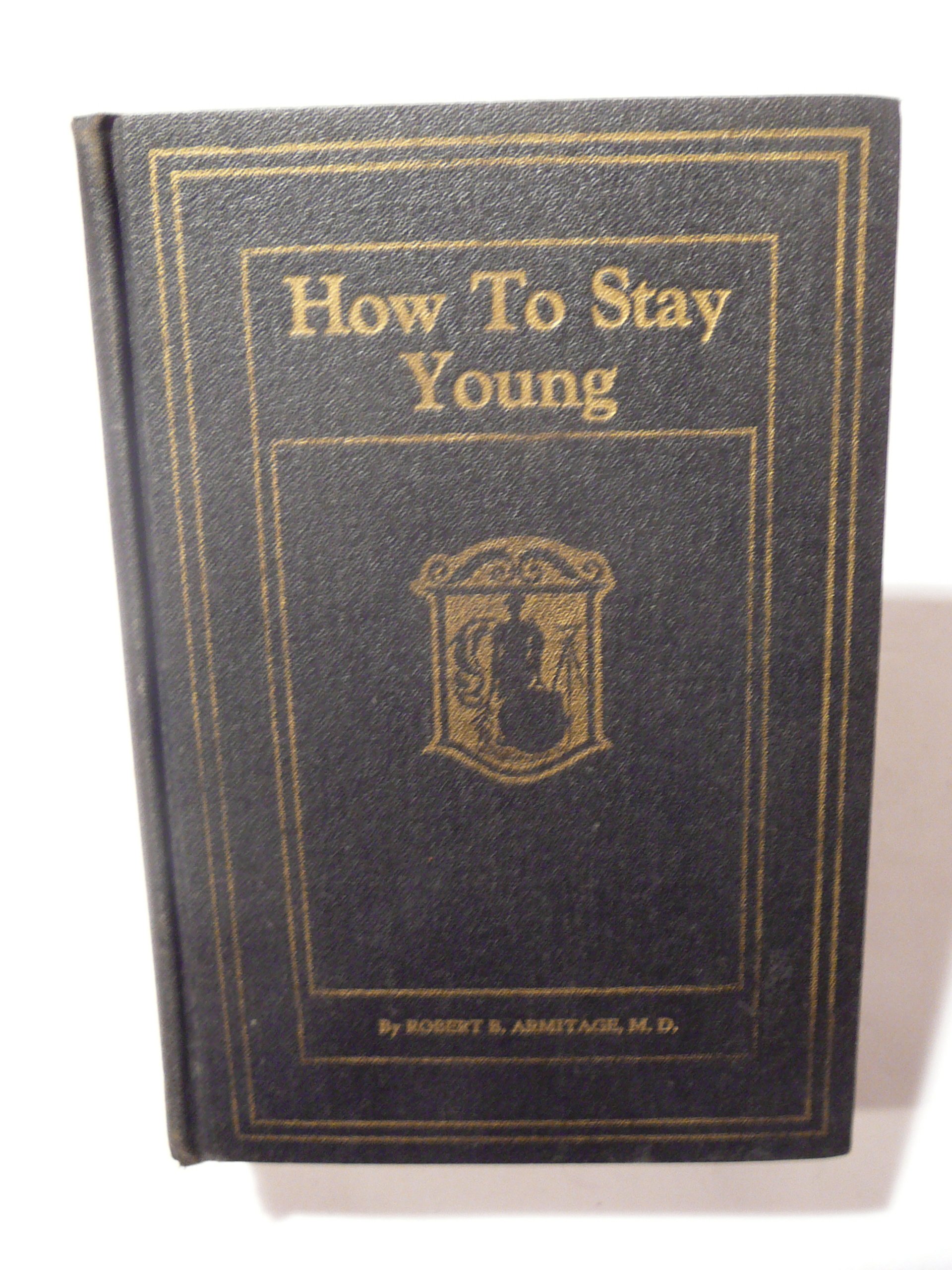
Robert B.
Armitage, MD
author of "How
to Stay Young"
and books that
targeted
women's sexual
concerns,
including
"Never Told
Stories: How
Girls are
Deceived",
"Private Sex
Advice to
Women: For
young wives
and those who
expect to be
married."
|
The
Boxer
Rebellion

MRS.
DORCHESTER: And you never
heard from him again? You
know the Boxers stormed the
Legation--he fought
desperately and
valiantly, the Chinese
servant described all
that--how he was taken
prisoner and tortured so he
almost lost his mind. At
night he raved in delirium.
He called a woman's name,
but there was no one of that
name in the Legation--
In
1900, in what
became known
as the Boxer
Rebellion (or
the Boxer
Uprising), a
Chinese secret
organization
called the
Society of the
Righteous and
Harmonious
Fists led an
uprising in
northern China
against the
spread of
Western and
Japanese
influence
there. The
rebels,
referred to by
Westerners as
Boxers because
they performed
physical
exercises they
believed would
make them able
to withstand
bullets,
killed
foreigners and
Chinese
Christians and
destroyed
foreign
property.
The Siege of
the
International
Legations
occurred in
the summer of
1900 in Peking
(today
commonly
spelled
Beijing), the
capital of the
Qing
Empire.
Menaced by the
Boxers, an
anti-Christian,
anti-foreign
peasant
movement, 900
soldiers,
marines, and
civilians,
largely from
Europe, Japan,
and the United
States, and
about 2,800
Chinese
Christians
took refuge in
the Peking
Legation
(Diplomatic
Corp) Quarter.
The Qing
government
took the side
of the Boxers.
The foreigners
and Chinese
Christians in
the Legation
Quarter
survived a
55-day siege
by the Qing
Army and
Boxers.
The siege was
broken by an
international
military force
which marched
from the coast
of China,
defeated the
Qing army, and
occupied
Beijing. By
the terms of
the Boxer
Protocol,
which
officially
ended the
rebellion in
1901, China
agreed to pay
more than $330
million in
reparations.
|
Accoutrement
Pearls
 |
MRS.
BLANCHARD:
Magnificent
pearls!
MRS.
COURTNEY-PAGE:
This
strand--the
shortest and
smallest--was
given to me by
Harlow Bingham
upon our
engagement.
You know he
died--(she
sighs)--before
we were
married--an
accident--horse-racing.
MRS.
DORCHESTER:
Did you marry
Mr.
Courtney-Page
after
MR.--what's
his name
died-- Your
first
fiancé?
MRS.
COURTNEY-PAGE:
No. I became
engaged to
Philip Harlow,
an Englishman.
He
brought me
this second
strand--the
second largest
and
longest--from
India. He went
ahead to South
Africa but he
died of
fever...
MRS.
PAYNE-DEXTER:
And the other
strands--you
have two
more--
MRS.
COURTNEY-PAGE:
This third one
was the gift
of my husband,
Mr.
Courtney-Page.
I would not
let
him give them
to me until
after we were
married.
MRS.
DORCHESTER:
That was a
wise
precaution.
MRS.
PAYNE-DEXTER:
It is
surprising
that he risked
giving you
pearls at all.
MRS.
COURTNEY-PAGE:
So he finally
purchased a
strand in
Vienna--larger
and longer
than the
other.
MRS.
BLANCHARD: And
then did he
die too?
It's
about
status.
Throughout
history, the
pearl, with
its warm inner
glow and
shimmering
iridescence,
has been one
of the most
highly prized
and
sought-after
gems.
Countless
references to
the pearl can
be found in
the religions
and mythology
of cultures
from the
earliest
times. The
ancient
Egyptians
prized pearls
so much they
were buried
with them.
Cleopatra
reportedly
dissolved a
single pearl
in a glass of
wine and drank
it, simply to
win a wager
with Mark
Antony that
she could
consume the
wealth of an
entire nation
in just one
meal.
In ancient
Rome, pearls
were
considered the
ultimate
symbol of
wealth and
social
standing. The
Greeks held
the pearl in
high esteem
for both its
unrivaled
beauty and its
association
with love and
marriage.
During the
Dark Ages,
while fair
maidens of
nobility
cherished
delicate pearl
necklaces,
gallant
knights often
wore pearls
into battle.
They believed
the magic of
these lustrous
gems would
protect them
from harm. The
Renaissance
saw the royal
courts of
Europe awash
in pearls.
Because pearls
were so highly
regarded, a
number of
European
countries
actually
passed laws
forbidding
anyone but the
nobility to
wear them.
During the
European
expansion into
the New World,
the discovery
of pearls in
Central
American
waters added
to the wealth
of Europe.
Unfortunately,
greed and lust
for the
sea-grown gems
resulted in
the depletion
of virtually
all the
American pearl
oyster
populations by
the 17th
century. Until
the early
1900's,
natural pearls
were
accessible
only to the
rich and
famous. In
1916, famed
French jeweler
Jacques
Cartier bought
his landmark
store on New
York's famous
Fifth Avenue
-- by trading
two pearl
necklaces for
the valuable
property.
|
Lorgnettes
 |
MRS.
PAYNE-DEXTER:
I don't see
her.
MRS.
DORCHESTER: She
moved behind
the column.
MRS.
PAYNE-DEXTER:
I can't see
her. Why
didn't you
tell me before
the column got
in the way?
MRS.
DORCHESTER: If
you were not
so vain,
Phoebe, you
would wear
decent glasses
like mine.
MRS.
PAYNE-DEXTER:
Indeed, I can
see perfectly
well.
MRS.
DORCHESTER:
Well, I don't
blame you for
using your
lorgnette. It
does add
distinction to
your Payne-Dexter
manner.
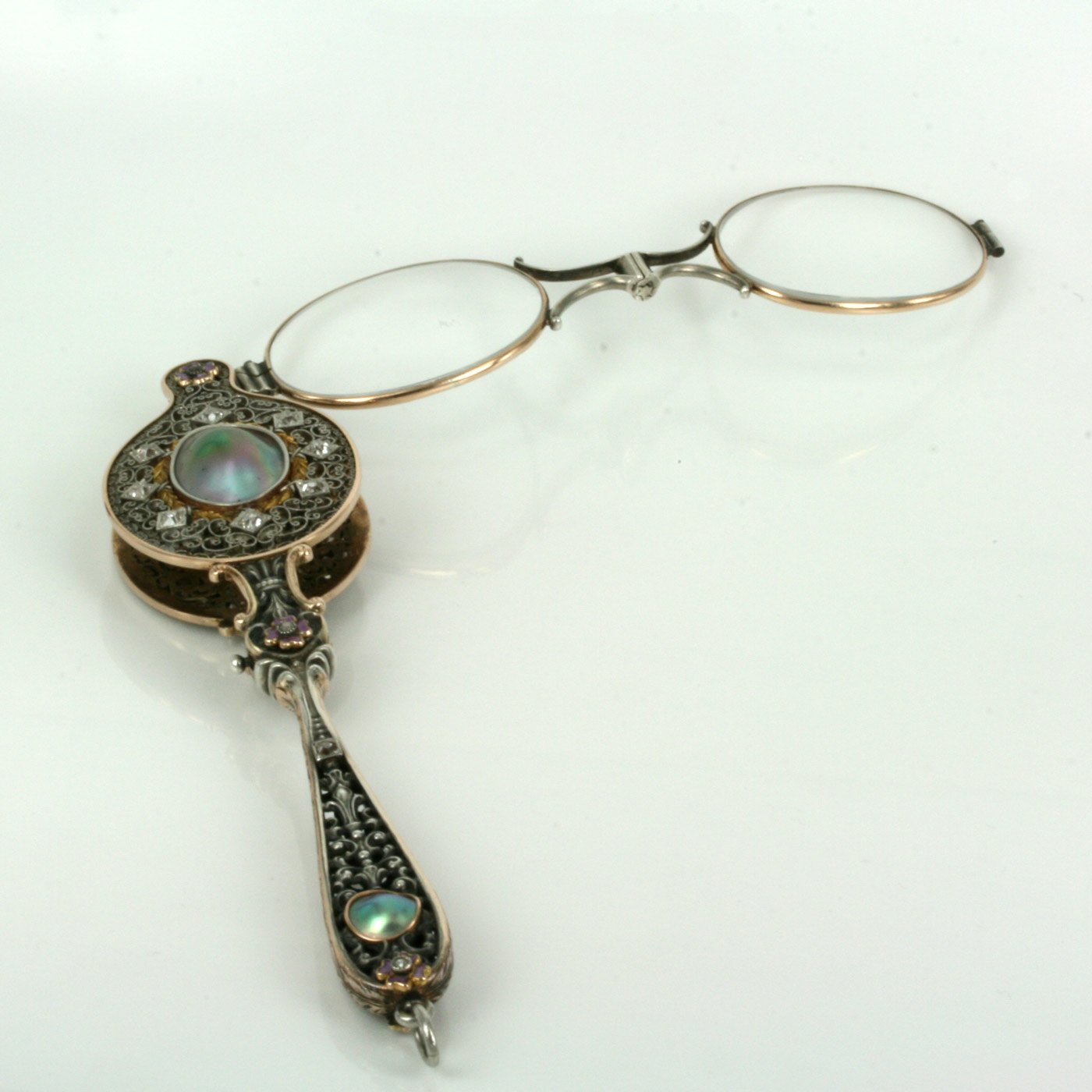
The
word lorgnette
is derived
from the
French
lorgner, to
take a
sidelong look
at, and Middle
French, from
lorgne,
squinting. The
lorgnette was
usually used
as a piece of
jewelry,
rather than to
enhance
vision.
Fashionable
ladies usually
preferred them
to spectacles.
These were
very popular
at masquerade
parties and
used often at
the opera.
They were worn
popularly in
the 19th
century.
|
 |
Amber
Lockets and
Watch Charms
|
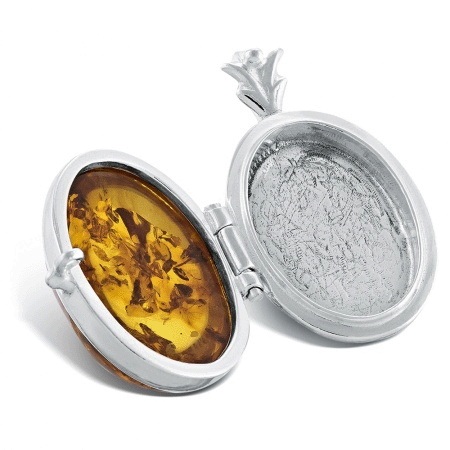
MRS. BLANCHARD: That
last day before he went, I
met him clandestinely in the
Park. I cut off a bit of my
hair that day. It was golden
then, like golden amber he
said, and he put it into an
amber locket he wore on his
watch charm.
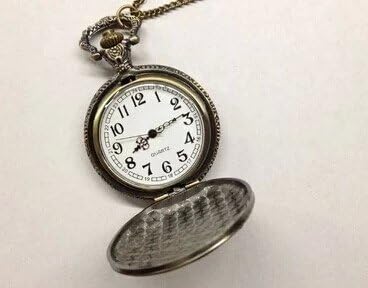
A watch charm may be placed
into a locket and worn on a
chain, and that locket face may be
amber. Amber is
fossilized tree resin, which
has been appreciated for its
color and natural beauty since
Neolithic times. Much valued
from antiquity to the present
as a gemstone, amber is made
into a variety of decorative
objects.
The wearing of charm bracelets
may have begun as a form of
amulet or talisman to ward off
evil spirits or bad
luck. Charm bracelets
have been the subject of
several waves of trends. The
first charm bracelets were
worn by Assyrians,
Babylonians, Persians, and
Hittites and began appearing
from 600 – 400 BC. Queen
Victoria wore charm bracelets
that started a fashion among
the European noble
classes. And this is how
they have come down to the ladies of
"Ever Young." Victoria
was instrumental to the
popularity of charm bracelets,
as she “loved to wear and give
charm bracelets." When her
beloved Prince Albert died,
she even made “mourning”
charms popular: lockets of
hair from the deceased,
miniature portraits of the
deceased, charm bracelets
carved in jet.
|
 |
|
Francois
Marcel (1852–1936) and
Marcelled Hair
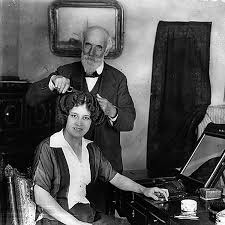 |
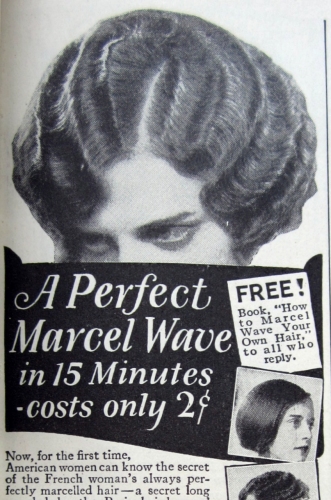
MRS.
PAYNE-DEXTER Her
white hair is perfectly
marcelled ...
MRS. DORCHESTER follows
MRS. PAYNE-DEXTER. She is a
sweet placid-faced woman
with white
hair, not marcelled
Marcelling
is a hair
styling
technique in
which hot
curling tongs
are used to
induce a curl
into the hair.
Its appearance
was similar to
that of a
finger wave
but it is
created using
a different
method.
The inventor
and stylist
emigrated to
the United
States and
changed his
name to
François
Marcel
Woelfflé,
sometimes
reported as
François
Marcel.
He was granted
U.S. patents
for implements
for performing
the technique;
the first,
U.S. patent
806386,
entitled
"Curling-Iron",
was published
in 1905, and
the second,
entitled
"Hair-Waving
Iron", for an
electric
version, under
the name
François
Marcel, was
published in
1918.
|
 |
Gerstenberg's
Contribution
 |
Alice Gerstenberg supported a number
of different
theatre
organizations
dedicated to
expanding the
reach of
American
theatre - to
new
playwrights,
to theatre
education,
childrens
plays, to
local artists
and audiences
- all this
alongside her
acting and her
playwriting,
and her
novels and her
extensive
theatre
journalism.
Eugene O'Neill
said he was
influenced by
the
psychological
dimensions of
Gerstenberg's
characterization.
The influence
of
psychoanlysis
was clear.
lt's apparent
in
Gerstenberg's
Overtones
(1913), Alice In Wonderland (1915),
and her more
experimental
works The
Buffer
(1916) and Beyond
(1917) and it
was not until
O'Neill's play
Desire
under the Elms
(1923) that he
explored the
implications
of
psychoanalytical
theory through
drama.
O'Neill's
interest in
parapsychology
also emerged
in Desire
under the Elms,
but again
Gerstenberg
was first to
examine the
sixth sense in
such early
one-act plays
as Attuned
(1918) and The
Unseen (1918).
Gerstenberg's
characters,
mostly
women,
inhibited by
out-worn
institutions
and by their
own fears,
make choices
that lead to
honest
self-expression.
While her characters are usually
upper-middle-class
women, they
reflect their
times in their
desires for
meaning and identity outside of marriage and
motherhood
without
sacrificing
romance.
Often her
endings are
sentimental,
but she
poignantly
examines the
trauma
associated
with women's
pressures to
marry so that
they can
maintain
social
position, the
economics of
marriage and
its effects on
the entire
family, and
the terrible
cost of
forcing young
women to
choose.
Needing
new dramatic
forms to
express the
daring of her
unconventional
themes
characters,
Gerstenberg
took the comic
form and gave
it not only a
variety of
structures but
a modern
psychological
dimension as
well.
Gerstenberg's
dramaturgy
reflects her
own vitality
as a woman and
as a
playwright
dedicated to a
new theater
which placed
artistic
integrity as
its highest
goal.
As
for theatre
development,
Gerstenberg
made her most
significant
contribution
to America's
little theater
movement,
which grew in
her lifetime
into a
national
community of
amateur
theatrework
and into an
established
network of
professional
regional
theatre
companies.
She cites her
founding of
the
Playwright's
Theatre of
Chicago
(1922-45) as
her most
important
contribution
to the
movement, as
it offered the
midwestern
playwrights
(and
audiences) an
opportunity to
see their
local work
produced.
For her work
as playwright
and producer,
Gerstenberg
won the
Chicago
Foundation for
Literature
Award in 1938.
Other
Works:
A Little World (1908). Unquenched Fire (1912). The
Conscience of
Sarah Platt
(1915). Four
Plays for Four
Women (1924).
The Land of
Don't Want To
by L. Bell
(dramatization
by
Gerstenberg,
1928). Water
Babies by C.
Kingsley
(dramatization
by
Gerstenberg,
1930). Star
Dust (1931).
When Chicago
Was Young
(with H.
Clark, 1932).
Glee Plays the
Game (1934).
Within the
Hour (1934).
Find It
(1937). London
Town
(dramatization
by
Gerstenberg,
1937). The
Queen's
Christmas
(1939). Time
for Romance
(with M.
Fealy, 1942).
Victory Belles
(with H.
Adrian, 1943).
The Hourglass
(1955). Our
Calla (1956).
On the Beam
(1957). The
Magic of
Living (1969). |

|
The Last
Word
In her Playbill
Who's Who, for
a war-time
farce, Victory
Belles
(1943),
Gerstenberg
offered the
highlights of
her life in
the theatre:
|