
Metropolitan Playhouse
The American Legacy
The American Legacy
"Theatrical
archaeologist extraordinaire" - - Back Stage

Follow us....



|
Metropolitan Playhouse
The American Legacy "Theatrical
archaeologist extraordinaire" - - Back Stage
|
Follow us.... |
|||||||
| Playing | Next | A Woman's Honor | Tickets | Company | Location | Mission | History | Links |
|
| Woman's Honor A Comedy in One-Act by Susan Glaspell |
|
|
 "Did it ever strike you as funny that woman's honor is only about one thing, and that man's honor is about everything but that thing?" Susan Glaspell's "Woman's Honor" opened on 26th April 1918, during the second New York season of the Provincetown Players. "Woman's Honor" is considered one of Glaspell's lesser plays. Its significance, however, relies on its novel form as well as on Glaspell's criticism of sexual double standards. While "Woman's Honor" is Glaspell's broadest comedy, it is also representative of Glaspell's style in its move to a more serious tone. 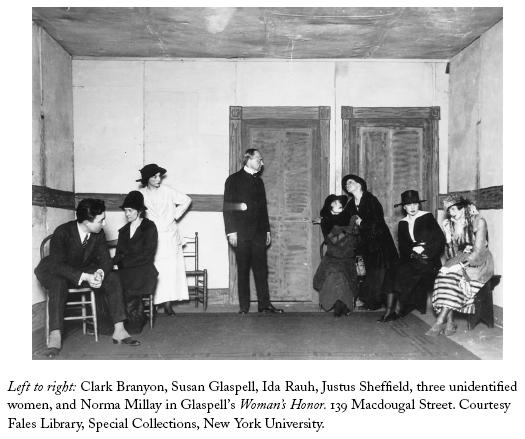 "Woman’s Honor"
was the star of a bill that included Eugene O’Neill’s grim
drama "The Rope" and F. B. Kugelman’s long-forgotten "The
Hermit and his Messiah." Many of the Provincetown Players’
most talented actresses were in the large cast, including
Ida Rauh as The Scornful One, Norma Millay as The Silly
One, and Susan Glaspell herself as The Cheated One.
According to Robert K. Sarlós, the stage featured a
“simple box set” to represent the sheriff’s conference
room. "Woman’s Honor"
was the star of a bill that included Eugene O’Neill’s grim
drama "The Rope" and F. B. Kugelman’s long-forgotten "The
Hermit and his Messiah." Many of the Provincetown Players’
most talented actresses were in the large cast, including
Ida Rauh as The Scornful One, Norma Millay as The Silly
One, and Susan Glaspell herself as The Cheated One.
According to Robert K. Sarlós, the stage featured a
“simple box set” to represent the sheriff’s conference
room.The play is set in a "A Room in the Sheriffs House adjoining the jail." Young Gordon Wallace stands accused of killing a man but, for fear of ruining her reputation, refuses to name the woman who can give him an alibi. A half dozen female characters appear claiming to be the unnamed woman and voicing various views, most of them negative, of the male concept of “woman’s honor.” In "Woman’s Honor," Glaspell used one of her favorite devices: leaving the female protagonist off stage (at least as far as we know). Does the absent woman represent all women of the time, or are she and her “honor” a fiction created to protect a guilty man? The comic tone of the play diminishes as the women discuss and reveal the real reason that bonds them together: their surprising necessity to be viewed as unchaste. At the climax of the play the one of the women (The Scornful One) wonders, “Did it ever strike you as funny that woman's honor is only about one thing, and that man's honor is about everything but that thing?” And her comment makes the others question, “What is woman's honor?” And they resume that it is just “A thing men talk about”, “A safe corner”, “A star to guide them”, and also a “vice for them”. Therefore the one issue that seems to be pivotal for these women's identity depends totally on men and it is only of interest for men too. Glaspell scholar J. Ellen Gainor believes that “Glaspell reveals the patriarchal constructs underlying the convention; honor, like other aspects of women's identity, is a male creation foisted upon women”. As J. Ellen Gainor has said, Glaspell portrays two different positions about women in the conflict between the two men: Wallace's romantic notion that women need to be protected, and the sheriff's standpoint that women are coward and self-centred. Furthermore,Glaspell uses "Woman's Honor" to stage a debate – not only between these two patriarchal notions of womanhood, but also between these culturally dominant perspectives and those of women themselves, precisely at the moment when women were just beginning to have an opportunity to oppose these traditional beliefs in both the private and public spheres. The play's generic peculiarities can also be pointed out as typically Glaspellite. "Woman's Honor" is seen as “a light parody of the many realistic plays in which a woman sacrifices her honor to save a man”. But in Glaspell's portrayal of the six women, the play is also considered a reworking of the medieval morality plays or an early example of expressionism. Influences of French farce are also obvious in the multiple entries and exists, the mistaken identities and the almost identical repetitions of dialogues and movements. Production History  Pictured below ... Nina Moise ( director, first Provincetown Players production) Ida Rauh (The Scornful One, Provinctown Players productions and in the Greenwich Village Players production) Frank Conroy (The Lawyer and director, Greenwich Village Players production) Norma Millay (The Silly One, Provincetown Players' productions) The Provincetown Players The Seventh Bill of 1918 April 26, 27, 28, 29, 20, May 1, 2 Provincetown Playhouse The Hermit and his Messiah Play by F.B. Kugelman The Rope A Play by Eugene O'Neill and A WOMAN'S HONOR A Comedy by Susan Glaspell A Comedy by Susan Glaspell 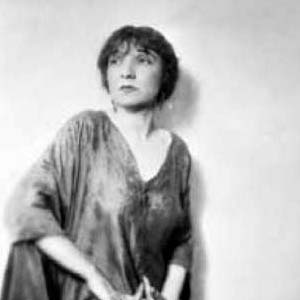 Mr. Foster, The Lawyer.Justus Sheffield Gordon Wallace, The Prisoner.Clark Branyon Boy. Murray Cooper The Women The Shielded One ) ( Marjory Lacey-Baker The Motherly One ) ( Dorothy Upjohn The Scornful One ) ( Ida Rauh The Silly One ) ( Norma Millay The Mercenary One ) ( Alice MacDougal The Cheated One ) ( Susan Glaspell Directed by Nina Moise and Susan Glaspell Within the month, Ida Rauh, who had gotten great personal notices as the Scornful One at the Provincetown Playhouse, called upon Frank Conroy, actor-manager of the Greenwich Village Players, to add the "roaring comedy" by Susan Glaspell, to their current evening of one acts, and, in order to do so, they replaced Arthur Schnitzler's "The Big Scene". 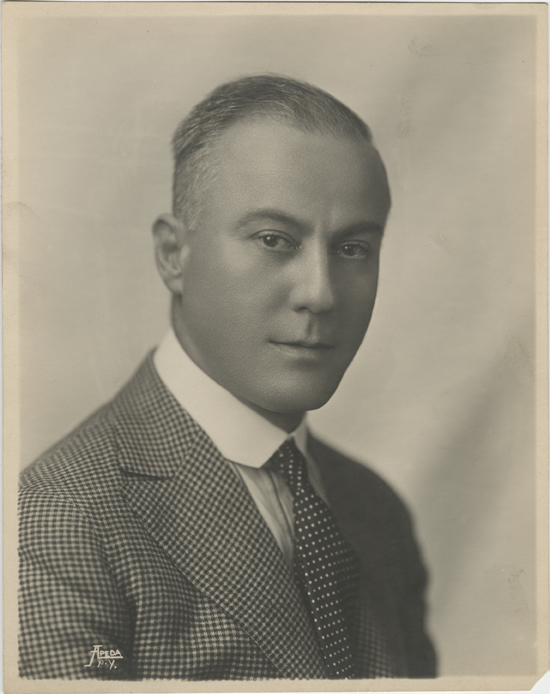 The Greenwich Village Players 20 May 1918 - 1 Jun 1918 Greenwich Village Theatre A Woman's Honor. Written by Susan Glaspell. Cast: Foster, the Lawer..Frank Conroy Brandon Wallace, the Prisoner..Everett Glass The Boy..Francis McDonald The Shielded Woman..Helen Robbins The Motherly Woman ..Dorothy Upjohn The Scornful Woman..Ida Rauh The Silly Woman..Agnes Rogers The Mercenary Woman..Ruth Boyd The Cheated Woman ..Margaret Fareleigh Directed by Frank Conroy The Sixth Bill of 1919, first of the two review bills given to represent the best of our total work to date, on April 11, 12, 13, 14, 15, 16, and 17: "The Widow's Veil," by Alice L. Rostetter; "Night," by James Oppenheim; "Bound East for Cardiff," by Eugene O'Neill A WOMAN'S HONOR  by Susan Glaspell The Prisoner..James Light The Lawyer..W. Clay Hill An Office Boy ..Lucien Cary, Jr. The Shielded Woman..Marjory Lacey-Baker The Motherly Woman ..Alice L. Rostetter The Scornful Woman..Ida Rauh The Silly Woman..Norma Millay The Mercenary Woman..Alice MacDougal The Cheated Woman ..Dorothy Miller Directed by Marjorie Lacey-Baker Published Glaspell, Susan. Woman's Honor. A Comedy in One Act (1917). Plays. Boston: Small, Maynard and Company, 1920. 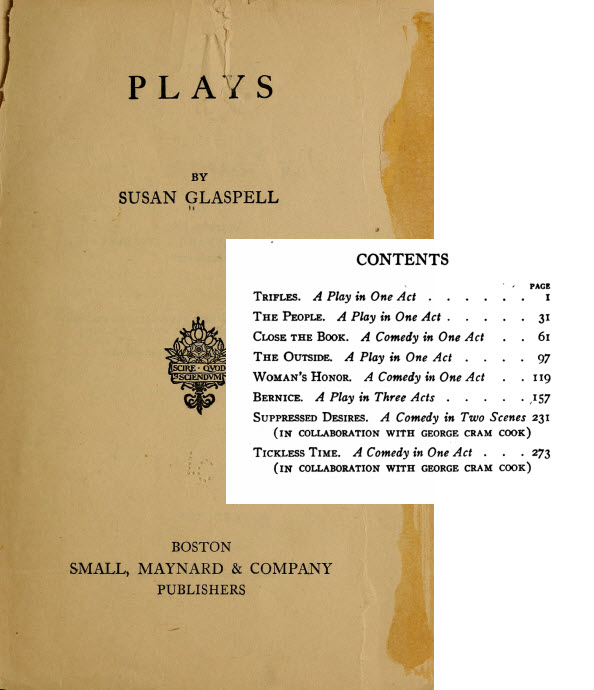 Plays. Boston: Small, Maynard and Company, 1920. (Contains Trifles, The People, Close the Book, The Outside, Woman’s Honor, Bernice, Suppressed Desires, and Tickless Time, the last two written in collaboration with George Cram Cook.) Also New York: Dodd, Mead and Company, Inc., 1920. Reviewed, Metcalf, L. Sutton, et al.. The Forum. [New York: Forum Publishing Company, 18861930. Susan Glaspell has turned playwright of late years, and not being content with her enviable position as an American novelist, has produced a number of the most distinguished plays, literary in craftsmanship, and popular from the standpoint of dramatic production. Of them all, “Trifles” is, of course, the best known, and the best from every other angle to be considered. “Suppressed Desires” is a close second, and the others are worthy of careful study from the student, and of reading for the growing number who have come to understand that the published play is as in- teresting as the short story,—or even more so. (“Plays,”by Susan Glaspell, Small Maynard & Co.) Reviewed, Lewis Lewishohn, The Nation. v.111 1920. In the rude little auditorium of the Provincetown Players on MacDougall Street ... the acting of the Players has been not only crude and unequal; it has been without energy, without freshness, without the natural stir and eloquence that come from within. This is the circumstance which has tended to obscure the notable talent of Susan Glaspell. The Washington Square Players produced “Trifles” and thus gave a wide repute to what is by no means her best work. The publication of Miss Glaspell's collected plays at last lifts them out of the tawdriness of their original production and lets them live by their own inherent life. If this view of Miss Glaspell’s literary character is correct, it may seem strange upon superficial consideration that four of her seven one-act plays are comedies. “Woman's Honor” is the best example of her art in this mood. By a sound and strictly dramatic if somewhat too geometrical device, Miss Glaspell dramatizes a very searching ironic idea: a man who refuses to establish an alibi in order to save a woman’s honor dies to prove her possessed of what he himself has taken and risks everything to demonstrate the existence of what has ceased to be. Freeman, Edwin Bjorkman, August 11, 1920: "Woman's Honor" is a farce that cuts more deeply than many tragedies. Its main significance to me is that it shows woman speaking out of her own nature and not in hypnotized conformation to man's established view of her. Women have produced many fine things in literature, but the amount of genuine feminine self-revelation contained in their works is astonishingly small. Even when seeming to lay bare her innermost soul, woman has generally taken good care that the exposure should not deviate too shockingly from the conventional image of her created by man to suit purposes of his own. Now she is changing at last, in this as in so many other respects and she is growing more and more determined to portray herself as she really is rarther than as man prefers her to be. Reviews Pictures: Susan Glaspell at 3 Milligan Place Provincetown Playhouse at 133 MacDougal St. Susan Glaspell The Greenwich Village Theatre, at 7th Avenue and 4th St. as seen from Sheridan Square Park. The majority of reviews were positive even if there were reservations about the production. The New York Tribune’s Rachel Drucker, for example, praised the “deft satiric dialogue” and lauded Glaspell as “a fresh and original genius in the theatre.” Within the month of opening with the Provincetown Players, The Greenwich Village Players, under Frank Conroy, then performed the play in their Greenwich Village Theatre on 4th St. and 7th Avenue, The following season, "Woman’s Honor" a 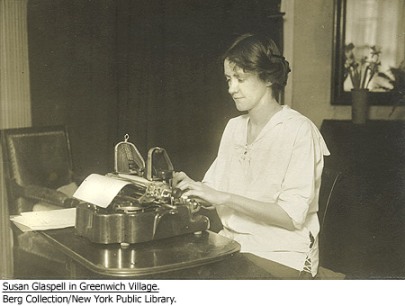 ppeared on a Provincetown “review bill,”
which reprised the company’s best recent offerings. The
play has since been staged in this country and abroad. ppeared on a Provincetown “review bill,”
which reprised the company’s best recent offerings. The
play has since been staged in this country and abroad. New York Times, May 21, 1918, John Corbin: "Woman's Honor Acted," New Comey at Greenwich Theatre Amusingly Explores a Theory. A new short comedy by Susan Glaspell, who has become a particularly prolific writer of one-act plays, was performed for the first time last at the Greenwich Village Theatre. It is entitled "Woman's Honor," and it a fairly amusing exposition of the theory that woman's honor is treasured a great more by men than it is by women. ...Miss Glaspell has inserted a number of bright lines, some of them smacking a little of Wilde, but none the poorer for that. The piece is well-played by some of the Grenwichers, and not quite so well by a few of the others. The Drama of Transition; Native and Exotic Playcraft, 1922, Isaac Goldberg, Stuart Kidd Pub. ... "Woman’s Honor," contain[s] some acute criticism of the masculine mind, wavers between the farce and the serious play. Out of the conversation in the sheriff’s house, among the women who have assembled to save the life of a young man by offering as sacrifice their coveted honor, arises a protest against the lily-white ideal of virtue in which men have so long stifled woman’s passional existence. They are sick of man’s “noble” feeling toward womanhood and recognize, with feminine uncanniness, the source of that feeling in the emotional satisfaction which it breeds in man. “Did it ever strike you as funny,” asks the Scornful One, “that woman’s honor is only about one thing, and that man’s honor is about everything but that thing?’ And later in the same piece, from the same personage: “Why, woman’s honor would have died out long ago if it hadn’t been for men’s talk about it.” And the Shielded One: "Oh, I hope you women can work out some way to free us from men’s noble feelings about it! I speak for all the women of my—(Hesitates) under-world, all those others smothered under men’s lofty sentiments toward them! I wish I could paint for you the horrors of the shielded life. (Says “shielded” as if it were “shameful’.) . . . Our honor has been saved so many times. We are tired." There are ideas enough in this little piece to float more than one long social satire, yet as Miss Glaspell has presented "Woman’s Honor" it is, like "The People," valuable for the detached ideas and for little else. For realism it is patently impossible; for satire it is too bald; for fantasy, too corporeal. The piece asks for different treatment and should receive it; the idea is too good to be wasted upon an indeterminate parlor entertainment. 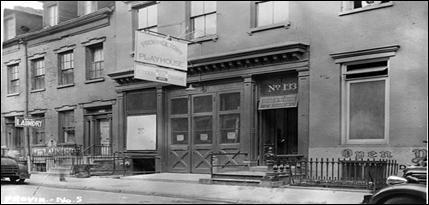 New York Tribune,
April 29, 1918, Heyward Broun: Susan Glaspell is another
author who has brilliant achievements to her
credit. A play by the author of "Trifles" and
"Suppressed Desires" and "The People" is certain to
command attention. "Woman's Honor" is an excellent
idea for a one-act farce, but it suffers because the
author has over-elaborated her original scheme and also
because as a matter of act she is not half so much
interested in her story as a she is in using it as a
means of discussion. Farce is an almost impossible
medium for discussion which is hard enough is any form
of drama. The story begins fast and then slows up
again, only to finish with startling suddenness.
Audiences we think demand unconsciously, a more or less
set pace for plays. It is easier to watch them if
you have some notion as to the approximate time at which
they will pas a given point. ...Much of this talk is good, but after
all
it is handicapped by the fact that the audience has been
taken part way in the development of an interesting
story. The talk is not good enough nor are the
varous kinds of thought sufficiently different to keep
some auditors from reaching "a-go-on-young-man-get-hung"
attitude. Then too the fact that five women appear to
save the prisoner is not two and a half times as funny
as if only two volunteered. In fact it is rather
less amusing. Most good ideas become less amusing
in proportion to the amount of elaboration. When a sixth
volunteer appears the prisoner settles the whole matter
by deciding that he'll plead guilty. New York Tribune,
April 29, 1918, Heyward Broun: Susan Glaspell is another
author who has brilliant achievements to her
credit. A play by the author of "Trifles" and
"Suppressed Desires" and "The People" is certain to
command attention. "Woman's Honor" is an excellent
idea for a one-act farce, but it suffers because the
author has over-elaborated her original scheme and also
because as a matter of act she is not half so much
interested in her story as a she is in using it as a
means of discussion. Farce is an almost impossible
medium for discussion which is hard enough is any form
of drama. The story begins fast and then slows up
again, only to finish with startling suddenness.
Audiences we think demand unconsciously, a more or less
set pace for plays. It is easier to watch them if
you have some notion as to the approximate time at which
they will pas a given point. ...Much of this talk is good, but after
all
it is handicapped by the fact that the audience has been
taken part way in the development of an interesting
story. The talk is not good enough nor are the
varous kinds of thought sufficiently different to keep
some auditors from reaching "a-go-on-young-man-get-hung"
attitude. Then too the fact that five women appear to
save the prisoner is not two and a half times as funny
as if only two volunteered. In fact it is rather
less amusing. Most good ideas become less amusing
in proportion to the amount of elaboration. When a sixth
volunteer appears the prisoner settles the whole matter
by deciding that he'll plead guilty.  New York Tribune,
May 21, 1918: "Pulls Woman's Honor Off Its
Pedestal: Susan Glaspell's Satire Says There's Too Much
Sentiment About It." Perhaps if one had not seen
Susan Glaspell's wonderful little play, "Trifles," and
her clever genre comedy, "Suppressed Desires," too much
would not have been expected from "Woman's Honor," given
last evening for the irst time at the Greenwich Village
Theatre. As it is, the new play on the bill at
that theatre doe not come up to expectations ...
The idea of "Woman's Honor" is original. Instead
of placing this commodity, quality or virtue - choose
your own classification - on the pedastal of tradition,
Miss Glaspell treats it satirically, pointing out how it
works harm to its possessors. "Give men something
else to be sentimental about," suggests one of the
characters. "Can't we give them some new vice in
its stead" asks another woman. That there are
clever lines in Miss Glaspell's playlet makes it worth
producing beyond doubt. There are far too few
satires on the American stages, for satire is a
gift that Americans do not possess to the same degree as
it is found in other countries. But her play was
none the better for the handicaps of a first
performance. New York Tribune,
May 21, 1918: "Pulls Woman's Honor Off Its
Pedestal: Susan Glaspell's Satire Says There's Too Much
Sentiment About It." Perhaps if one had not seen
Susan Glaspell's wonderful little play, "Trifles," and
her clever genre comedy, "Suppressed Desires," too much
would not have been expected from "Woman's Honor," given
last evening for the irst time at the Greenwich Village
Theatre. As it is, the new play on the bill at
that theatre doe not come up to expectations ...
The idea of "Woman's Honor" is original. Instead
of placing this commodity, quality or virtue - choose
your own classification - on the pedastal of tradition,
Miss Glaspell treats it satirically, pointing out how it
works harm to its possessors. "Give men something
else to be sentimental about," suggests one of the
characters. "Can't we give them some new vice in
its stead" asks another woman. That there are
clever lines in Miss Glaspell's playlet makes it worth
producing beyond doubt. There are far too few
satires on the American stages, for satire is a
gift that Americans do not possess to the same degree as
it is found in other countries. But her play was
none the better for the handicaps of a first
performance.Week of Plays on Broadway, June 8, 1918 Down in the Greenwich Village, where the strangers go to seek Bohemia, the local theatre added a new one act play to its bill last week. "Woman's Honor," by Susan Glaspell, is the play, and it proved to be an excellent little satire on the emotionalism of women. It is alleged that woman's honor is a chimera, devised by men as an excuse for chivalry. When a man finds himself charged with a crime which can be disproved if he offers an alibi, he declines to do so because it would involve the honor of a woman. Whereupon seven or eight applicants enter the plot, each professing to be "the woman." Thus the conditions are neatly rserved, and we find the honor of the man the paramount issue. Idah [SIC] Rauh gave a remarkably telling performance, and if others missed effectiveness, the playlet itself atoned for the shortcomings. New York Stage, Burns Mantle, May 26, 1918. "Again the Sex Delerium Holds Greenwich Village: Playwriting Attempt About a Prisoner Facing Death to Shield a Woman's Honor ..." Burns Mantle. "What is woman's honor?" demands Susan Glaspell in the newest of her discussions in play form just revealed to the Greenwich Village folk. And why should men insist on being so noble about it? "Has it ever occurred to you," demands one character of another, "that woman's honor concerns one thing alone, while man's honor concerns everything but that one thing?" They must have their freedom of expression, these villagers, whether in drama or verse, painting or what not. And they just love to hear each other talk. That they speak frankly and insist on "calling a Ford a Ford" is rather clarifying of the dramatic atmosphere, even though it may not always be entertaining. A "roaring comedy" the bills call "Woman's Honor." The playlet is indifferently acted by Frank Conroy and a bevy of his jelling amateurs.  Dramatic Mirror of Motion Picture and Stage, June 1, 1918: Although handicapped by a crude first night performance, which lacked the necessary verse to put it across, "Woman's Honor" is fairly amusing, with many a bright line and some that are decidedly raw but humorous. The play is without plot, being merely a situation, which in no way robs it of dramatic value, and is an exposition of the theory that woman's honor is more sacred to men than to women. The idea and the manner of exposing it is, to say the least original. "Woman's Honor" was produced a few weeks ago by the Provincetown Players. Philadelphia Inquirer New York. May 26, 1918: So the Greenwich Village Players substituted for "The Great Scene" another short play, one called "Woman's Honor" by Susan Glaspell which is one of the cleverest short plays to be seen this season. It is a social satire. There are women who are "shielded", who are "motherly," "scornful," "silly," "mercenary" and "cheated" and they represent the type for which their designation is suggestive. A prisoner is to be tried for a murder ... a horde of women, above described, each insist that "she" is the woman with whom the prisoner spent a certain time said to be the ours during which the crime was committed. Manifestly each of the would-be witnesses is a delicious liar which affords the comedy. New York Tribune, May 4, 1919, Rachel Drucker: Woman's Honor is a discursive but amusing play dealing with the plight of a chivalrous young man who will go to death rather than establishing his alibi by telling with whom he spent the night on which a certain murder was committed. He is shielding a woman's honor the newspaper account of his sacrifice brings out a half dozen women who are altruisitically ready to part with theirs to save the young man from his old-fashioned wrongheadedness. The deft satiric dialogue sparkles and sparkles, it lets in light and air on a topic that is usually treated with a stuffy and stilted romanticism. It is incredible that some enterprising has not seized upon the exceedlingly high gifts of Susan Glaspell. She is a fresh and original genius in the theater - shrewdly award of human values, satiric and sensitive. Metropolitan Playhouse  Saturday, September 26, 2020 8 PM Woman's Honor by Susan Glaspell An unwelcome sacrifice by yet another man hoping to tell a woman what she needs.  The Prisoner faces a long sentence, but he could cheat it if only he would say where he was and whom he was with. He refuses, committed to preserving "a woman's honor." But who wants him to? Not The Shielded One, not The Scornful One, not The Silly One, not The Motherly One, not The Cheated One, not even The Mercenary One. But will he believe it's not about him? Glaspell's experimental play of personified icons broke new ground and popped the bubbles of men's arrogance in 1918. It is not done yet. A live, virtual screened reading Directed by Rachael Langton Viena Aiello, Kathy Christal, Christina Eskridge, Maggie Anne Gillete, Zarra Kaahn, Jacob Shipley, Rebecca Simpson-Wallack, Danielle Stanek, and Lawrence Winslow Virtual settings by Rifka Milder Followed by a talkback with guest scholar J. Ellen Gainor Longtime leader in the International Susan Glaspell Society and Professor of Performing and Media Arts at Cornell University Sources Makowsky, Veronica. “Susan Glaspell and Modernism.” The Cambridge Companion to American Women Playwrights. Ed. Brenda Murphy. Cambridge: Cambridge University Press, 1999. 49- 65. History Matters/Back to the Future https://www.historymatterscelebratingwomensplaysofthepast.org/plays/view/Womans-Honor Hernando-Real, Noelia. "Woman's Honor". The Literary Encyclopedia. First published 24 August 2009 [https://www.litencyc.com/php/sworks.php?rec=true&UID=16001, accessed 25 September 2020.] |
|
|
 |
|