
Metropolitan Playhouse
The American Legacy
The American Legacy
220 East Fourth Street ~ New York, New
York 10009
(212) 995 8410
(212) 995 8410

Follow us....


|
Metropolitan Playhouse
The American Legacy 220 East Fourth Street ~ New York, New
York 10009
(212) 995 8410 |
Follow us.... |
|||||||
| Playing | Next | Season | Tickets | Company | Location | Mission | History | Links |
|
| Timeline of Event Click the links to learn more about the people and events that feature in our story. |
|||
| |
1846 | ||
| February 26 William F. Cody born in Le Qaire, Iowa. |
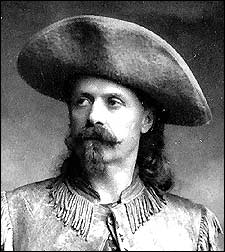 William F. Cody |
||
| 1867 |
|||
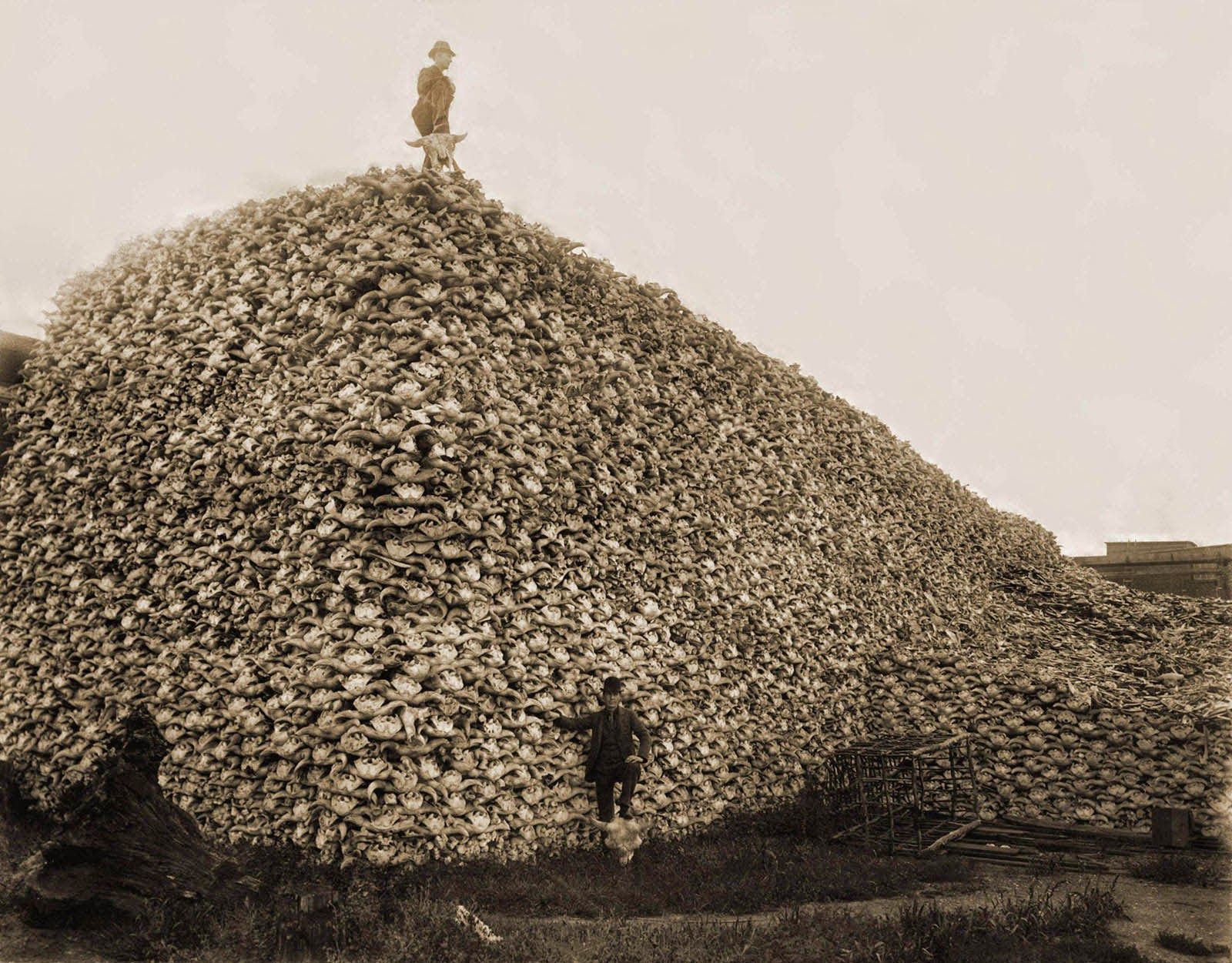 A mountain of buffalo skulls |
After post-Civil War stints
with the US Army and The Pony Express, Cody hunts buffalo
for the Union Pacific Railroad. At 21 years old, he is a
seasoned veteran of the Western frontier. |
||
| Cody earns the nickname
"Buffalo Bill" after slaughtering more than 4,000 buffalo in
a little over a year. |
|||
| 1868 |
|||
| Cody returns to the army,
serving as chief of scouts for the Fifth Calvary and taking
part in efforts to wipe out Indian resistance to western
settlements. |
|||
| 1869 |
|||
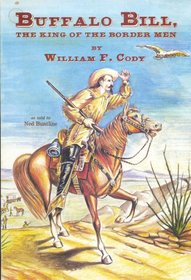
| Newspaperman Ned Buntline
publishes the dime novel Buffalo Bill, King of the
Border Men, presenting an exaggerated image of Cody
and catapulting him to national fame. |
 |
||
| 1872 |
|||
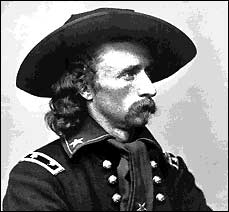 George Armstrong Custer |
At the behest of President
Ulysses S. Grant, Cody and Lt.
Col. George A. Custer guide Grand Duke Alexis of
Russia on a hunting trip to the plains. |
||
| Later that year, Cody stars in Buntline's stage show The Scouts of the Prairie. Though universally panned as an actor, Cody flourishes as a showman. For the next several years, Cody performs on stage in the winter and scouts in the West during the summer, deliberately blurring the line between man and myth. | 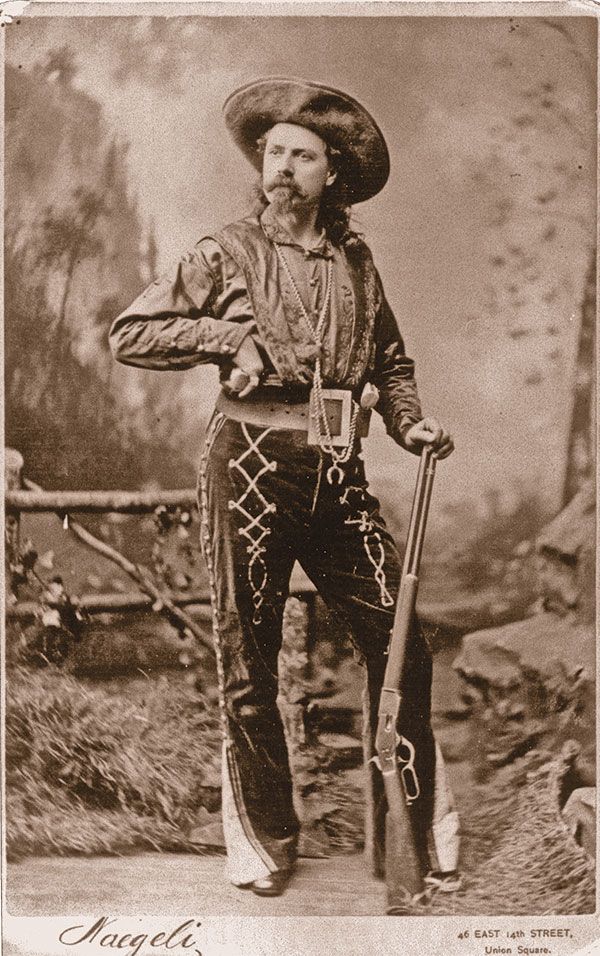 Cody in his stage costume |
||
|
|
1876 |
|
|
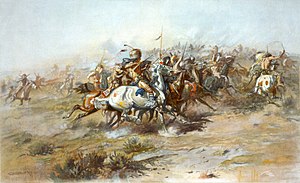 An artist's representation of the battle. |
June 25 The Battle of the Little Bighorn Following the discovery of gold in the Black Hills, the US Army reneges on a treaty and attempts to displace the natives living there. Sioux and Cheyenne forces take to the field under Crazy Horse and Sitting Bull. When Custer brings 600 troops in the Little Bighorn Valley, the native forces defeat them, killing every single soldier. |
||
| Later that year, Cody kills
and scalps a Cheyenne warrior called Yellow Hair while
supporting incursions into the Black Hills. The press,
playing into Cody's myth, aggressively publicizes the event
and spins it as a response to Custer's death. |
|
||
| 1877 |
|||
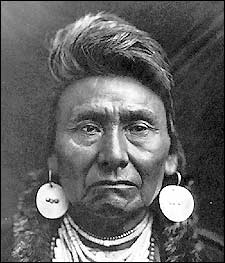 Chief Joseph |
Displaced from his land, Chief
Joseph of the Nez Percé leads 700 people, with fewer
than 200 warriors, through 1400 miles of mountainous Pacific
Northwestern terrain, fighting off and evading 2,000 US Army
forces. |
||
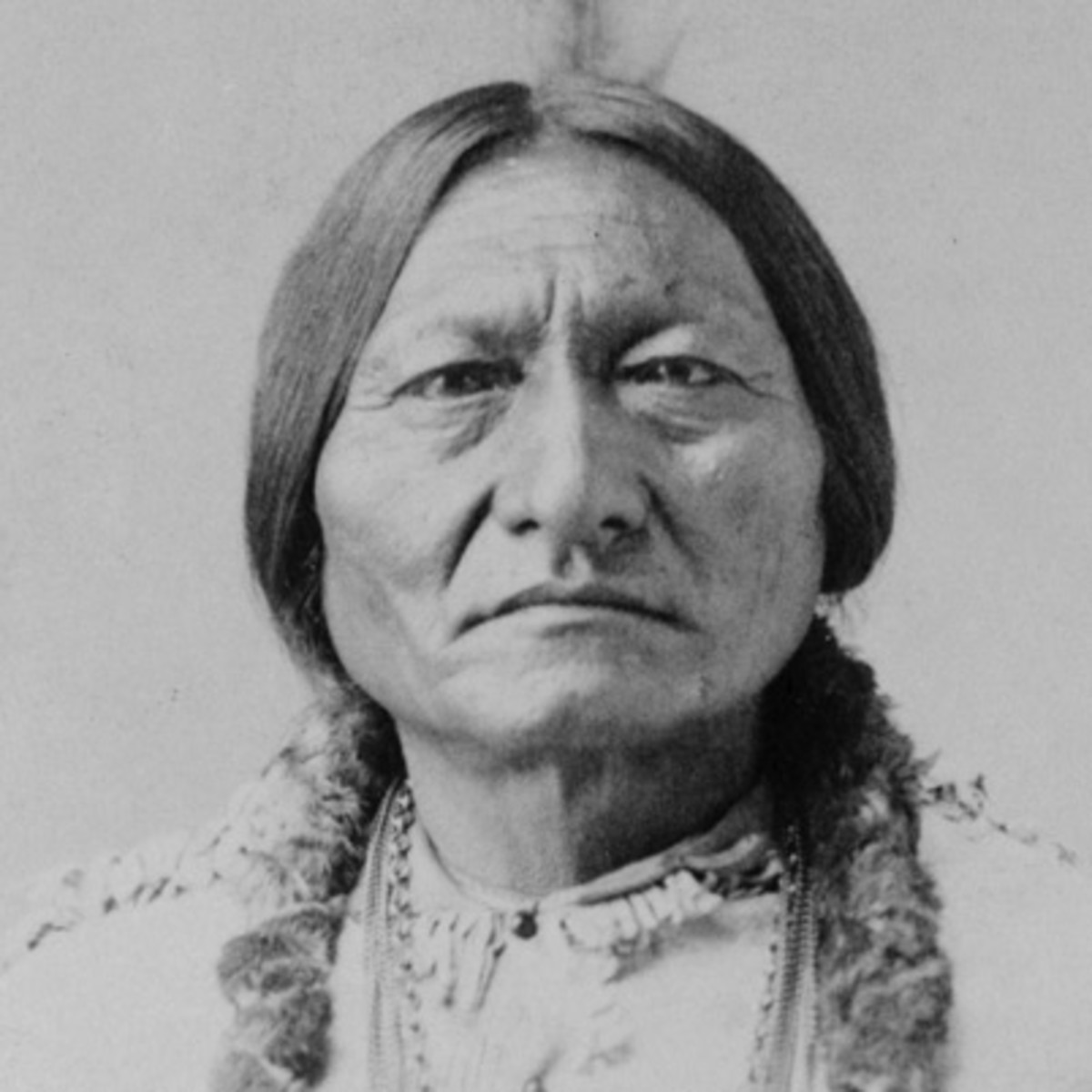
| After splitting with Crazy
Horse,
Sitting
Bull leads his band across the Canadian border and
into safety, rebuffing US officials' offers of a pardon. |
 |
||
| October 5 However, Chief Joseph's luck runs out before he can reach Canada too. The army stops his group of Nez Percé less than 40 miles from the border. He surrenders. |
|||
| 1881 |
|||
| July 19 Unable to feed his people, in part due to the scarcity of buffalo, Sitting Bull leads his group back to the United States and surrenders. US officials allow his people to travel to Standing Rock Reservation, but, fearing Sitting Bull's potential to galvanize a discontented population, they imprison him at Fort Randall for nearly two years. |
|||
| 1883 |
|||
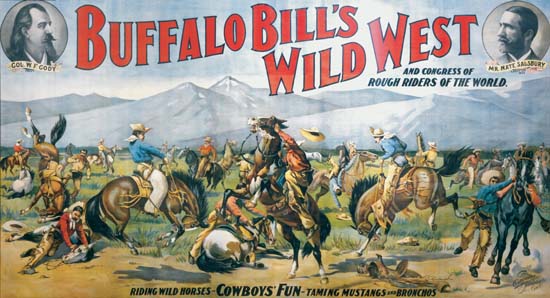 |
William Cody stages his first Wild
West Show in Omaha, Nebraska. The four hour extravaganza has
a cast of more than 100, including the sharpshooting Annie
Oakley, and recreates events from Western lore, including
"Custer's Last Stand" at the Little Bighorn. |
||
| May 10 US officials allow Sitting Bull to rejoin his people at the Standing Rock Reservation, but they afford him no status befitting his revered leadership role. |
|||
| A delegation of US Senators travels
to Standing Rock to discuss opening the reservation to
white settlers. Sitting Bull speaks forcefully against the
measure, but they ignore him. |
|||
| 1885 |
|||
| Sitting Bull is allowed to
leave Standing Rock to appear in Cody's Wild West Show. He
earns $50 a week, but the leaves the show after only one
season. During his time with Cody, he meets President Grover
Cleveland. |
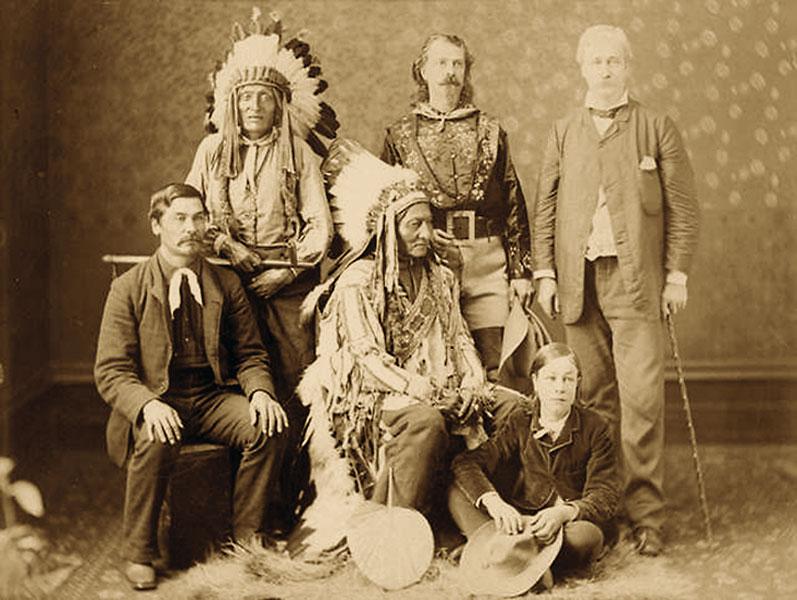 Buffalo Bill and Sitting Bull pose with other members of the stage show. |
||
| 1886 |
|||
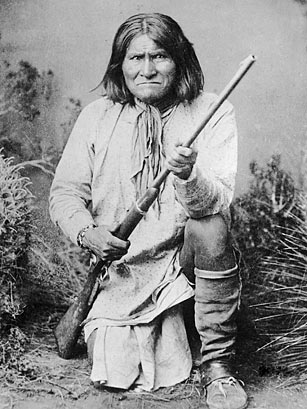 Geronimo |
Geronimo,
one of the final native leaders to continue resisting,
surrenders to US forces. |
||
| 1887 |
|||
| Congress passes the Dawes
Severalty Act, forcing individual land ownership on native
people who had practiced communal land ownership for
hundreds of years. Many white Americans use the act as an
opportunity to seize native land. In the 47 years that
follow, Indian controlled land falls from 138 million acres
to 48 million acres. You can read the text of the Dawes Act
here. |
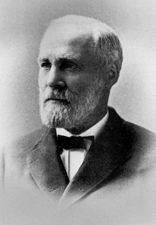 Senator Henry L. Dawes of Massachusetts |
||
| 1890 |
|||
|
Fearing the spread of the Ghost
Dance ritual, which Native proponents believed
capable of restoring the land to its pre-colonial status,
US officials seek to neutralize the still influential
Sitting Bull. A tense and dangerous situation begins to
unfold at the Standing Rock Reservation.
|
|||
| General Nelson Miles
implores Cody to come to Standing Rock and help resolve the
situation peacefully, hoping that their
shared past will help Cody convince Sitting Bull to
acquiesce to US demands. |
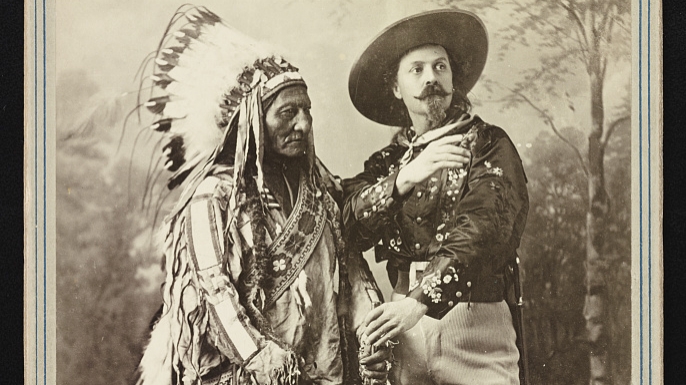 Buffalo Bill and Sitting Bull |
||
| Cody races to Standing
Rock, but is delayed several times. At one point, he spends
the night drinking with government officials and is too
drunk to ride the next morning. |
|||
| December 15 In the early hours of the morning, James McLaughlin orders Indian Police officers to arrest Sitting Bull. As they enter his cabin, a struggle ensues, and they kill Sitting Bull. |
|||
|
December 29
Fourteen days later, at the Pine Creek
Reservation, in the process of trying to disarm a group of
Lakota, US troops opened fire with rifles and cannons and
ultimately kill between 200 and 400 Lakota people at Wounded
Knee Creek.
|
|||
| Twenty of the soldiers who
participate in the massacre are awarded the
Medal of Honor, the highest personal military
decoration granted by the United States, "bestowed only to
the bravest of the brave."
The awards have never been rescinded. You can read their
full citations here. |
|||
| Read Lakota accounts of the
events at Wounded Knee here.
|
|||
| 1917 |
|||
| January 10 "Buffalo" Bill Cody dies and is buried at the summit of Lookout Mountain, near Denver. He was one of the most famous men in America, though he had lost the fortune his stage show had earned him through mismanagement and poor investment. |
|||
| 1964 |
|||
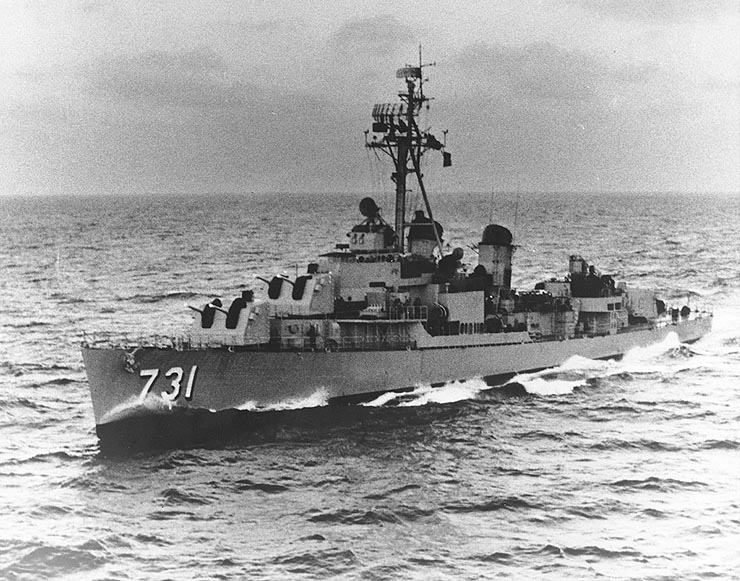 USS Maddox |
August 7
At the behest of President Lyndon B.
Johnson, Congress passes the Gulf of Tonkin Resolution in
response to an incident between the USS Maddox and
North Vietnamese naval vessels. The resolution escalates
American involvement in Vietnam.
|
||
| Johnson continues to ramp up the United States' presence in Vietnam, with sustained bombing campaigns and eventually ground troops. | 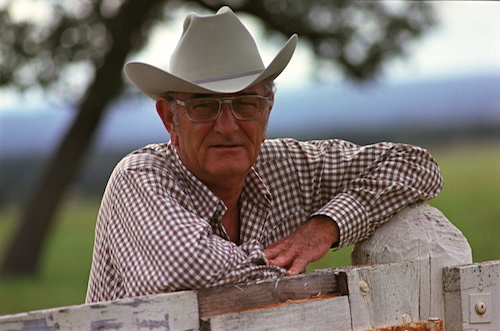 President Lyndon B.
Johnson
|
||
|
|
1968 |
||
 The site of the My Lai Massacre in 2015 Photograph by Katie Orlinsky |
March 16
US Army soldiers kill between 300 and
500 unarmed Vietnamese civilians in the Quảng Ngãi
Province. Read Seymour Hersh's contemporaneous coverage in
The New Yorker here.
|
||
| Though 26 soldiers are
court-martialed, only Lt. William Calley is convicted. He
serves three and a half years under house arrest. Calley
wouldn't publicly apologize for his role at My Lai until
2009. Read more coverage here. |
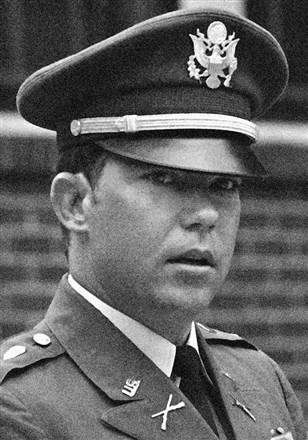 Lt. William Calley at
his court-martial.
|
||
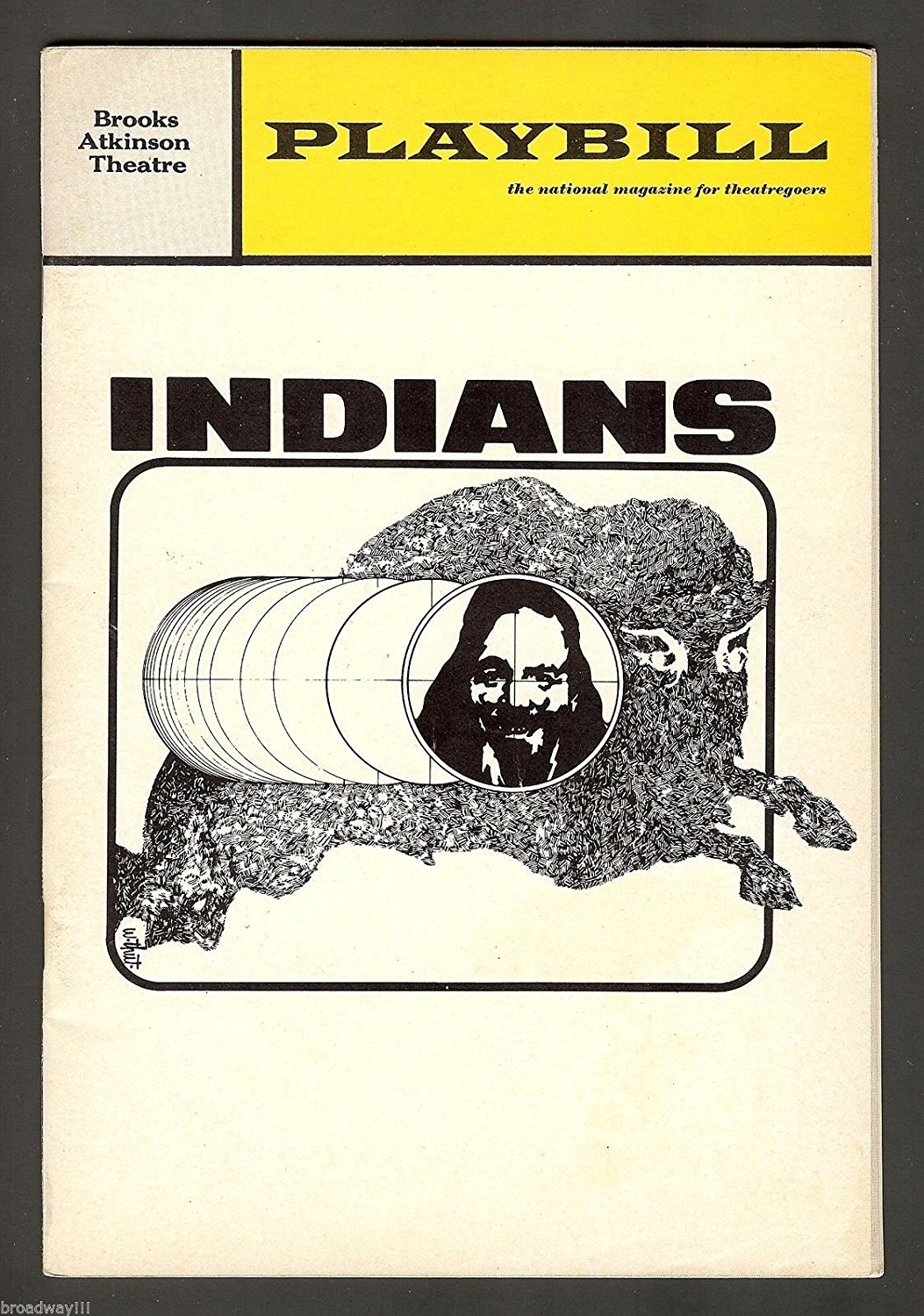 |
August 4 Arthur Kopit's Indians premiers in London at the Aldwych Theater. It premiers in New York the following year. |
||
| 1973 | |||
| February 27 200 activists and members of the American Indian Movement seize control of the town of Wounded Knee, SD and demand the US government fulfill the terms of various treaties on which they have reneged. |
|||
| Federal marshals and the
National Guard surround the town and a 71 day standoff
begins. The government officials and native activists traded
gunfire almost daily. Two native activists were killed, and
a federal agent was left paralyzed. The activists eventually
surrender in May. |
|||
| 2016 |
|||
April Members of the Standing Rock Sioux tribe and supporters protest the construction Dakota Access Pipeline, which would endanger reservation water sources and potentially disturb sacred ground. |
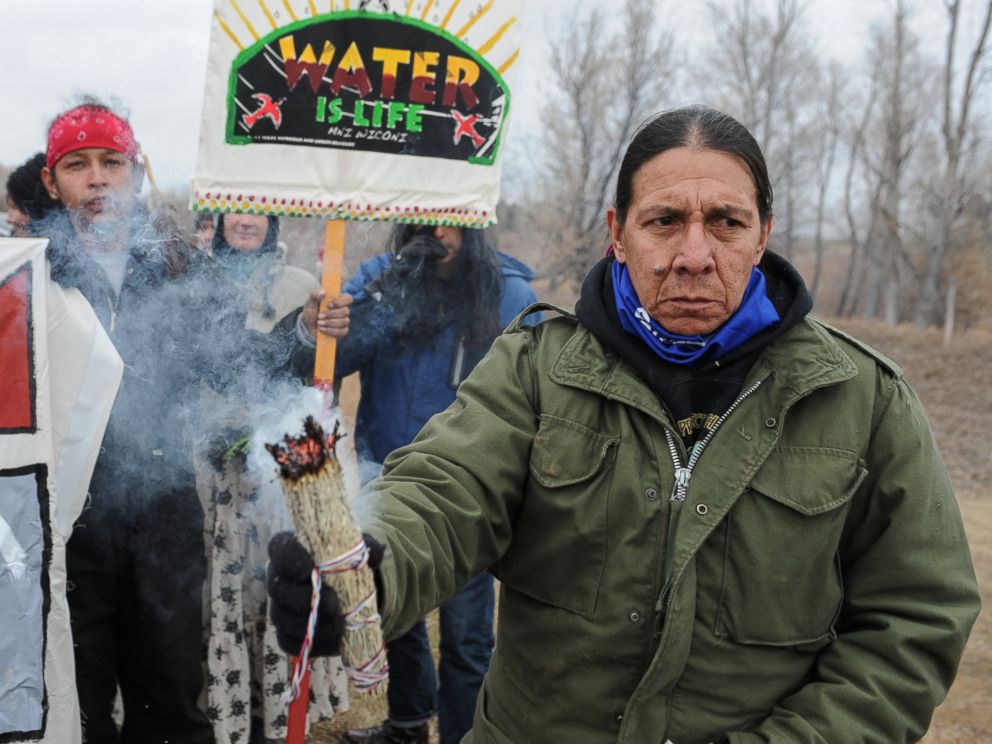 Photograph by: Stephanie
Keith
|
||
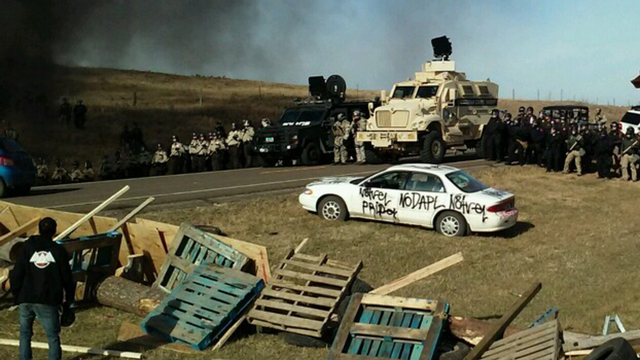 |
October 26
Police officers in riot gear confront
protestors near Standing Rock Reservation, using tasers,
pepper spray, and rubber bullets.
|
||
| 2017 | |||
| February 23 The protestors are cleared from the site after the Army Corps of Engineers grants an easement for the final segment of pipeline. |
|||